
Shop Air Intake by Category


Filters
39 products



Not sure it fits your truck?
Our Wildwood, FL techs will confirm the right part for your build before you buy.
Call or Text (352) 722-5295Air intake on the 1994-2002 Ford 7.3L Powerstroke
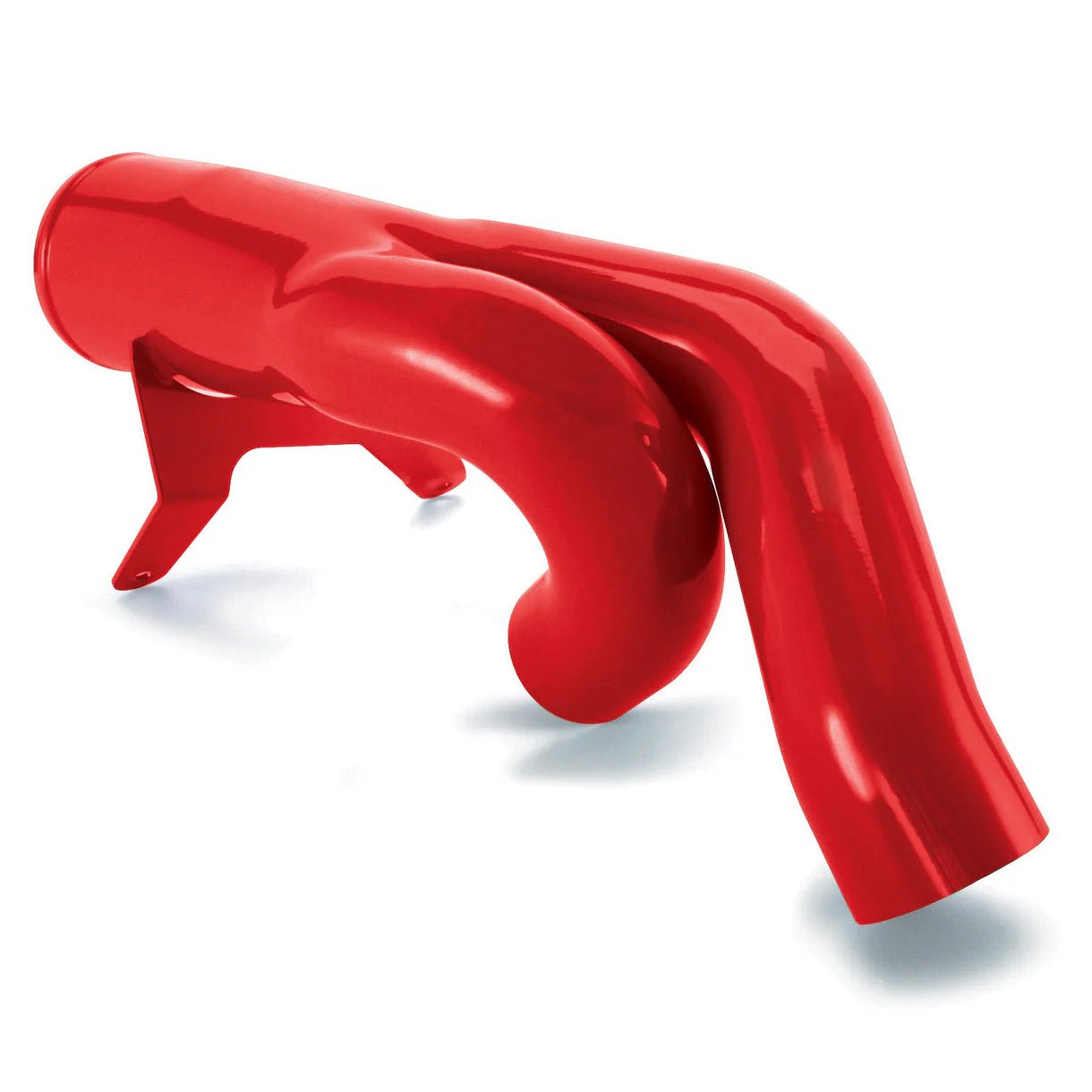
Air enters a fender-side airbox, runs through the intake tube and a rubber boot to the turbo compressor, then heads for the two intake plenums. On the 1999-2003 Super Duty, that charge air passes through an air-to-air intercooler on the way. Ford built it as a tube-and-fin core with plastic end tanks, joined to the piping with rubber boots and spring clamps, and a Y-pipe splits the cooled air between the plenums. The 1994-1997 OBS trucks run a non-wastegated Garrett TP38 with no intercooler at all. Late-1999 trucks moved to the wastegated GTP38, and its 5-bolt compressor housing decides which cold-side boot fits. The PCM reads boost through the MAP sensor. One factory detail explains most of the trouble on this system: the crankcase ventilation vents into the intake, so the boots, the Y-pipe and the engine valley slowly collect oil mist.
What fails and why
- Charge-air boots and clamps. Oil mist from the crankcase ventilation breaks the boots down until one blows off, and the factory spring clamps distort and loosen. Expect low boost, oily residue at the joints, sluggish response and black smoke, all worse when towing. It is an age problem, and it shows up sooner on tuned trucks.
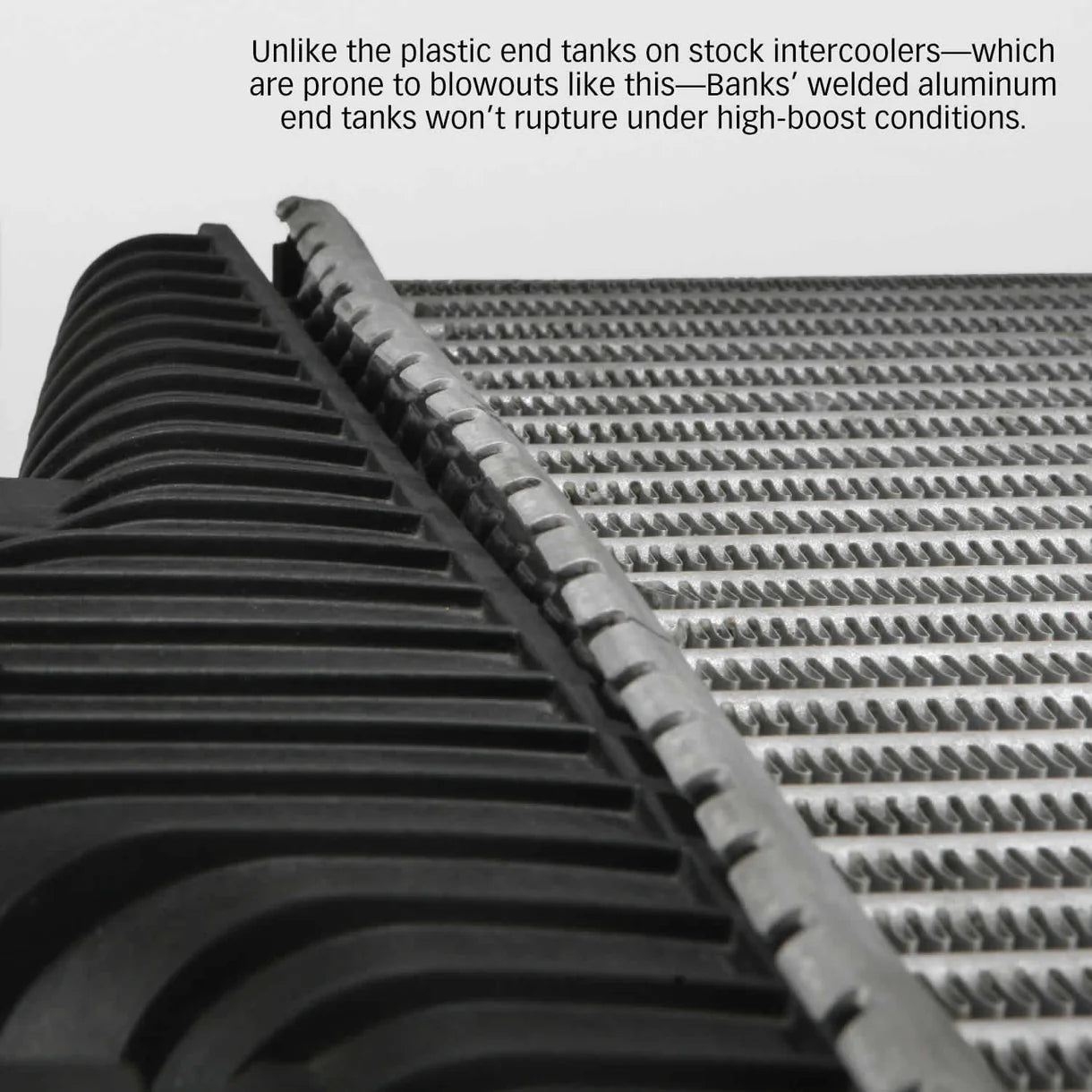
- Intercooler end tanks, 1999-2003. The plastic tanks on the factory intercooler can crack under elevated boost, mostly on tuned trucks or where the plastic is simply old. You get sudden boost loss, a hiss and a visible crack at the tank.
- Passenger-side plenum boot. Many owners report the flexible boot between the passenger plenum and the Y-pipe weeping oil and leaking boost.
- Early-1999 airbox clips. On trucks built before December 1998, the airbox retention clips can break and let dust slip past the filter into the turbo inlet.
- A neglected filter. A dirty, restrictive element raises crankcase vacuum and pulls oil through the ventilation system into the intake. The signs are oil in the Y-pipe boot and the valley, and rising oil consumption.
Two habits save you work here. When boost is low, pressure-test the charge system before you replace the turbo. And when you find oil pooled in the valley, check the intake side before you blame an engine seal, because the crankcase vent feeds right into it.
Stock replacement vs. upgrade
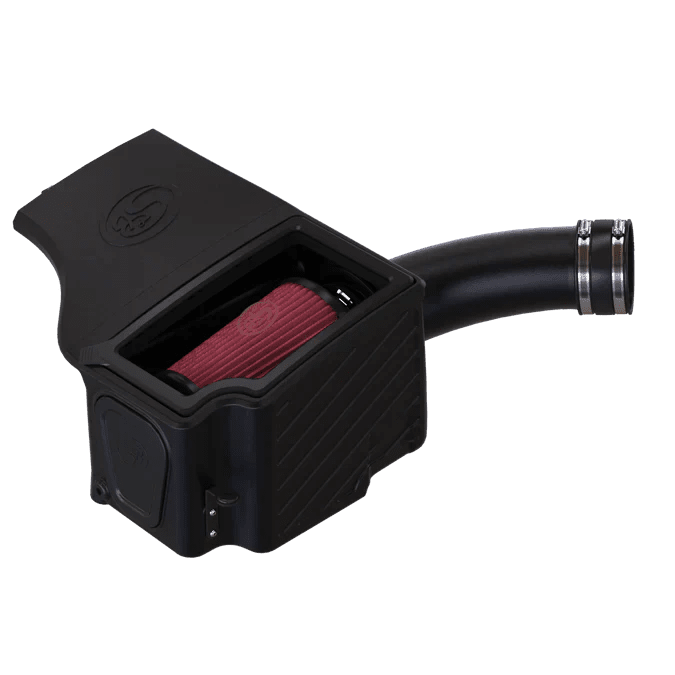
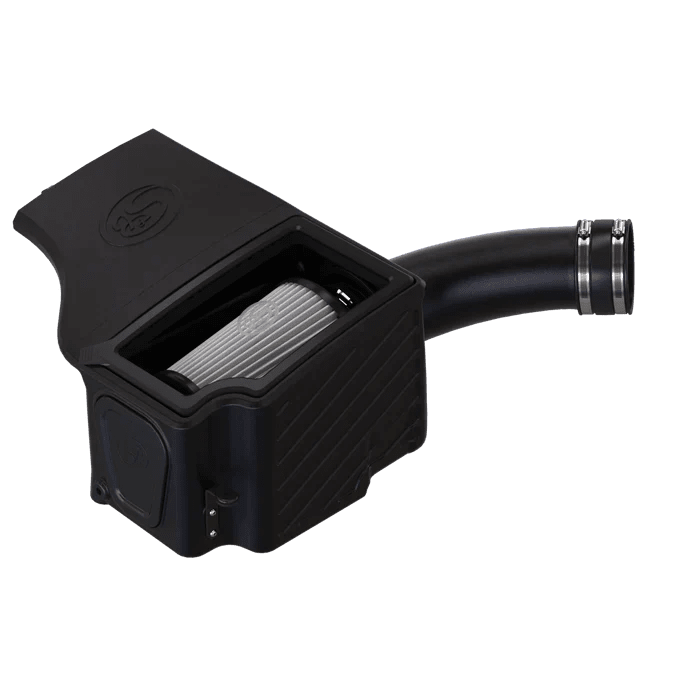
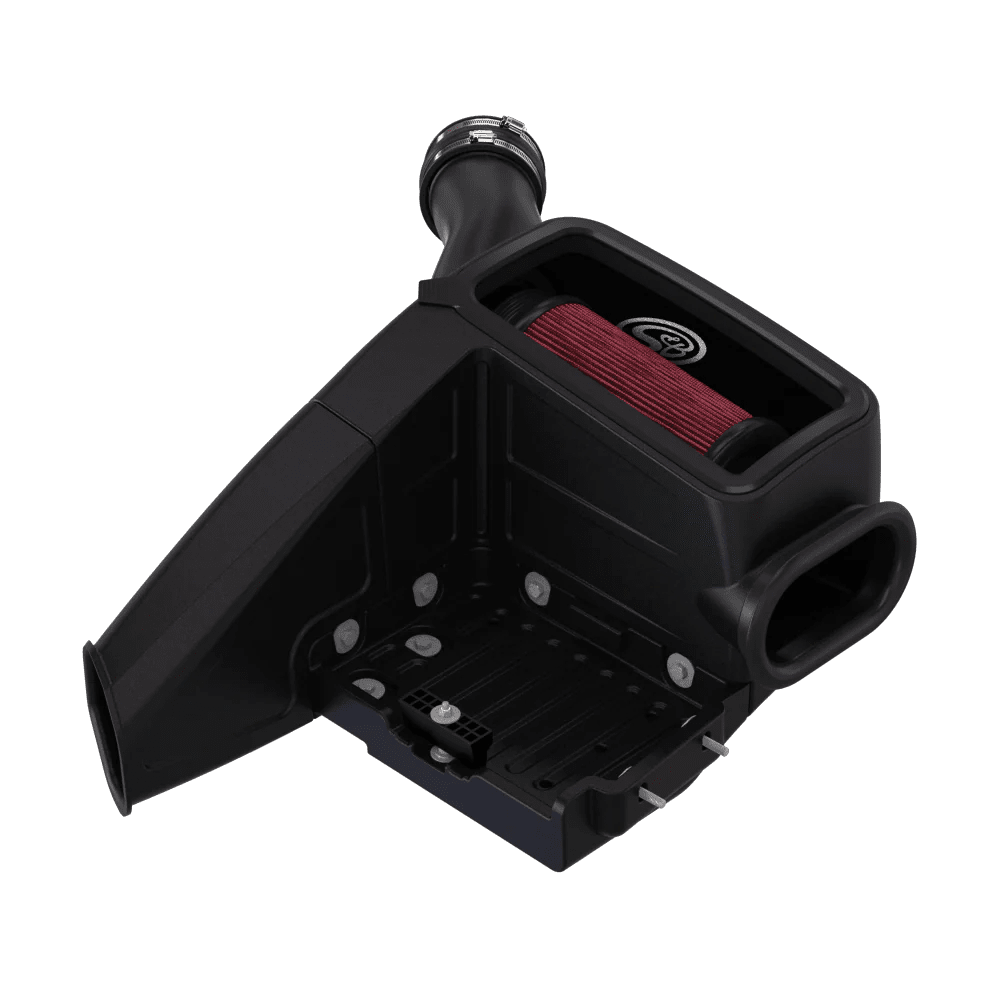
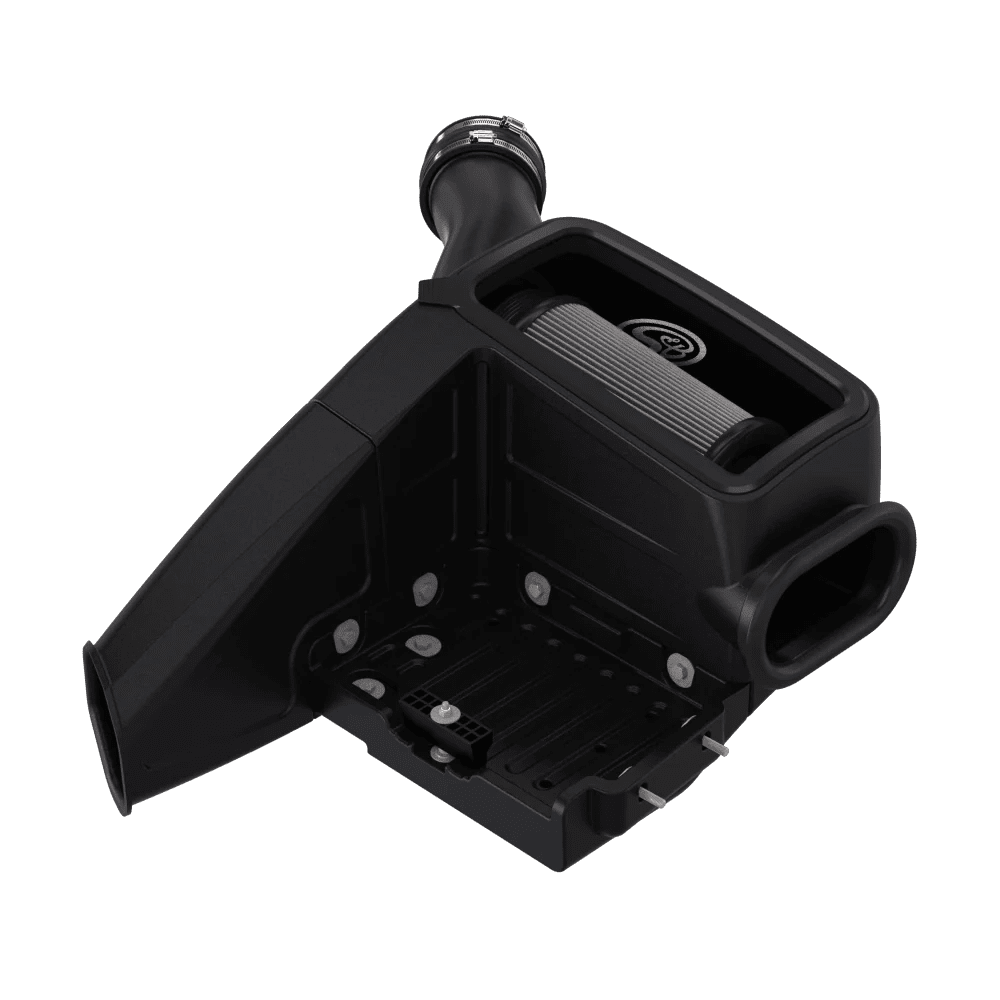
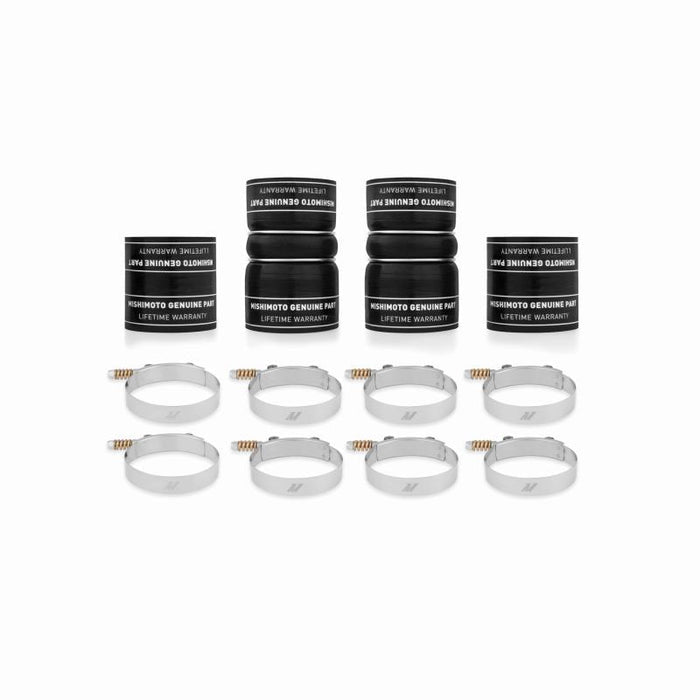
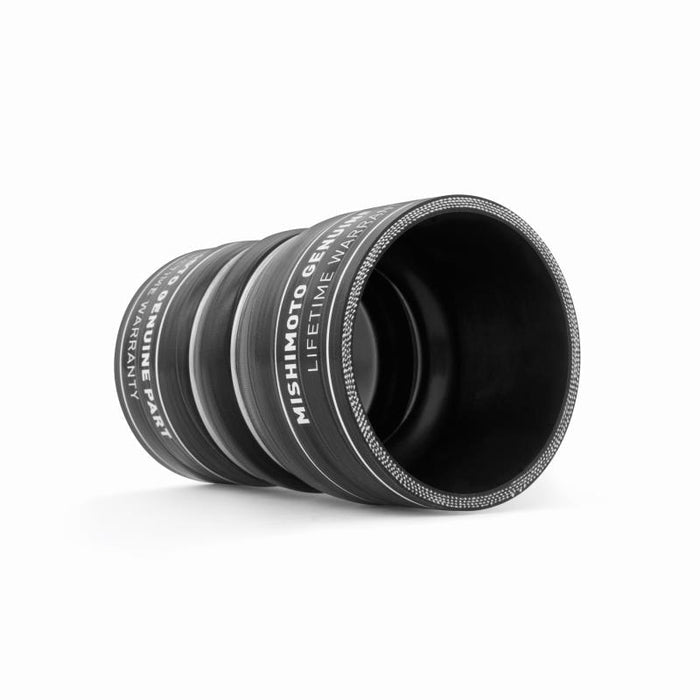
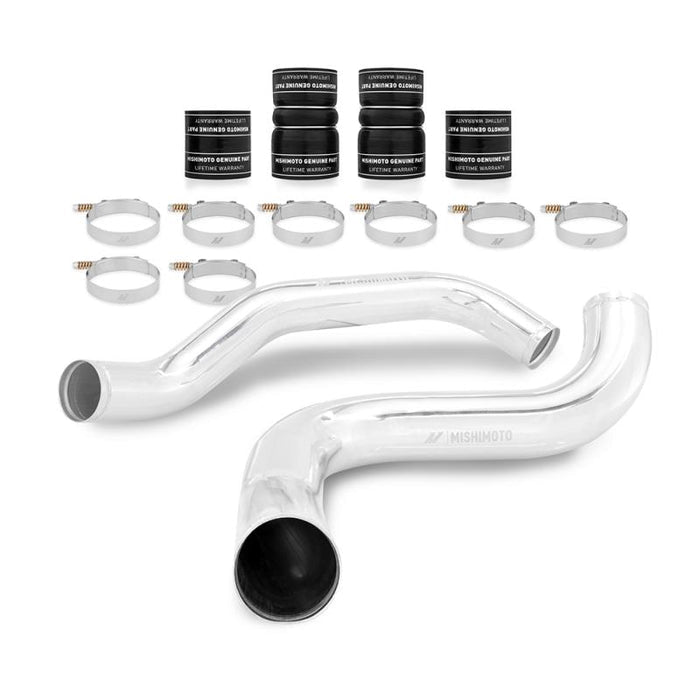
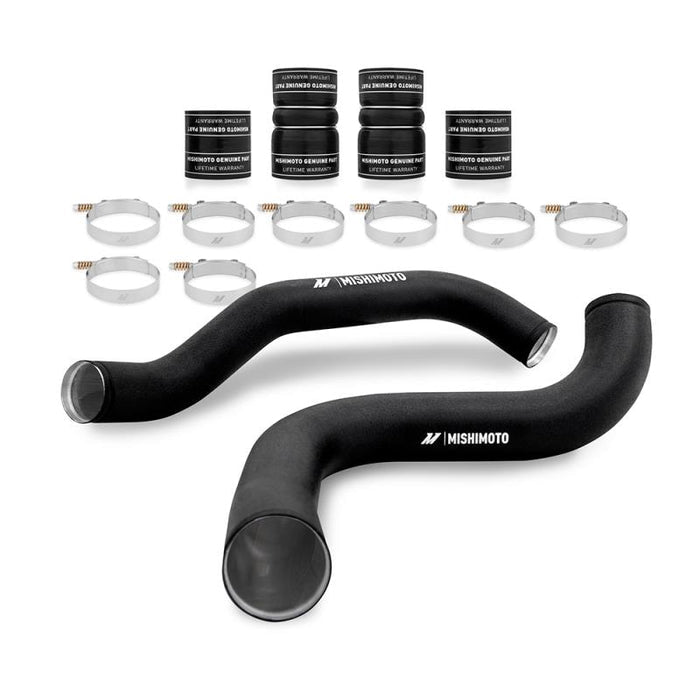
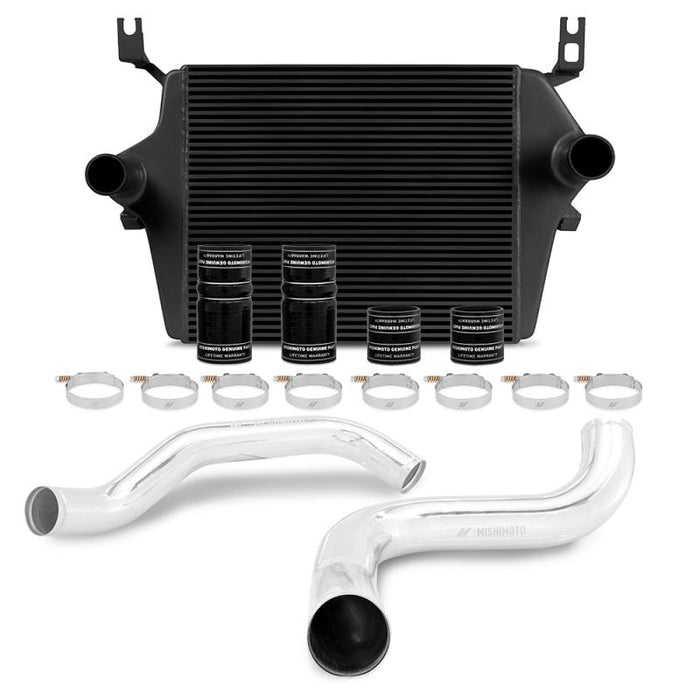
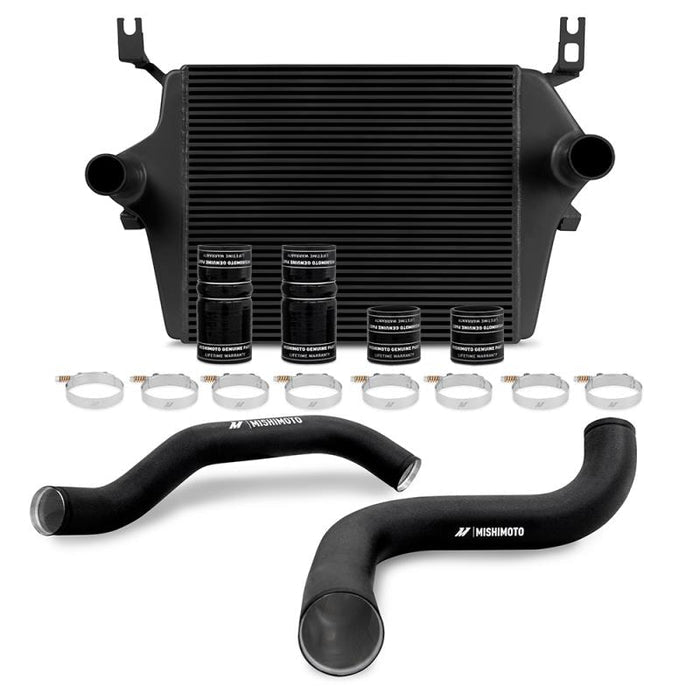
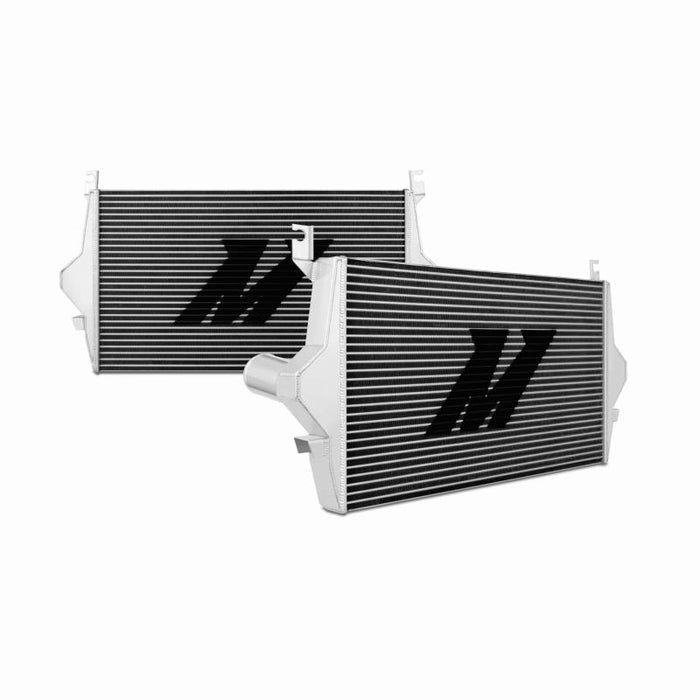
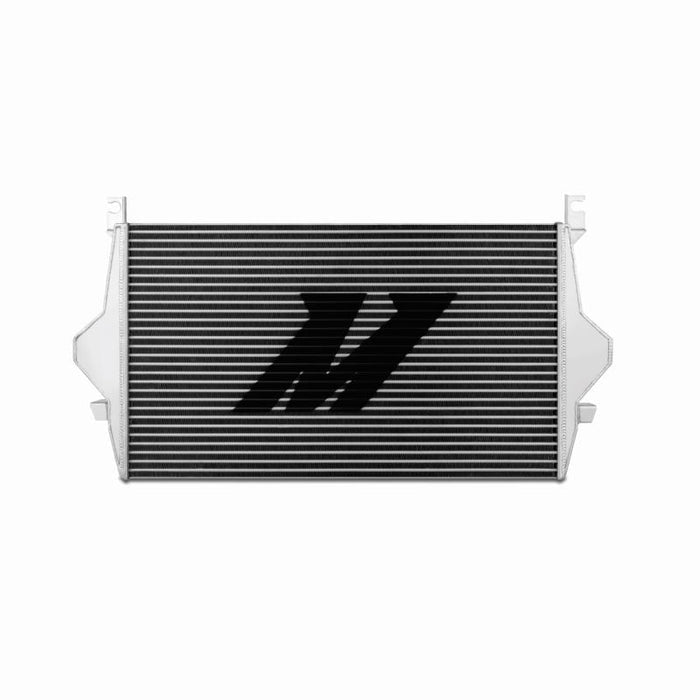
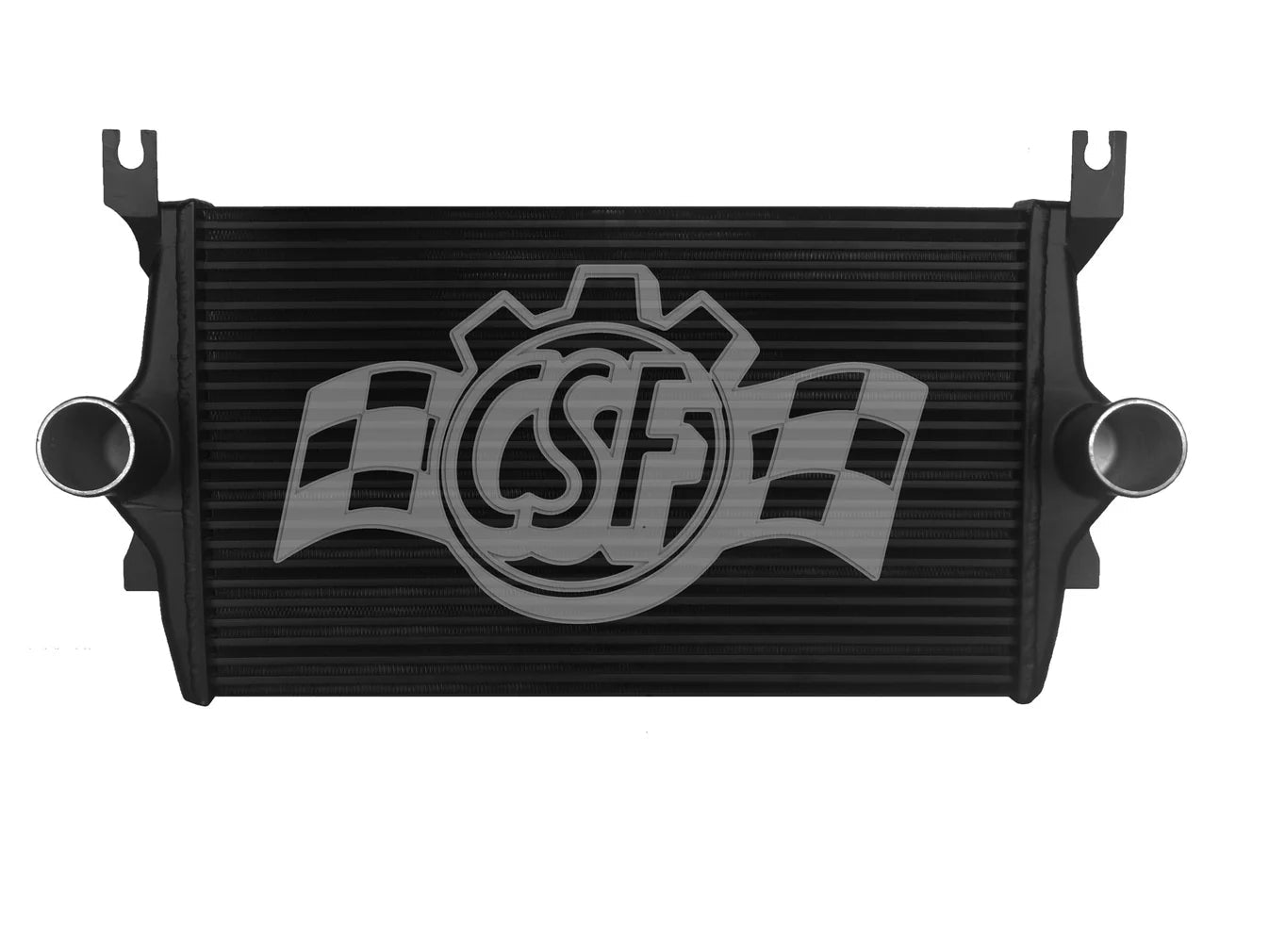
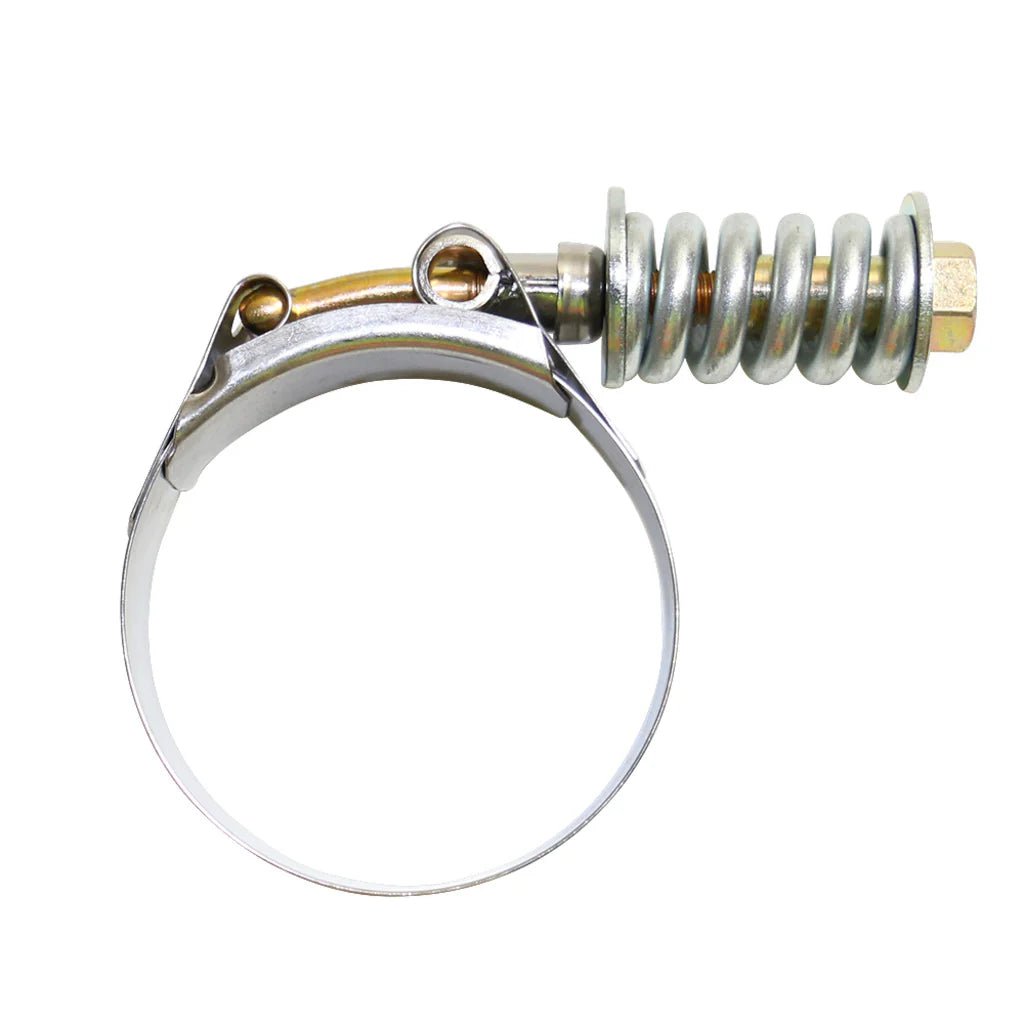
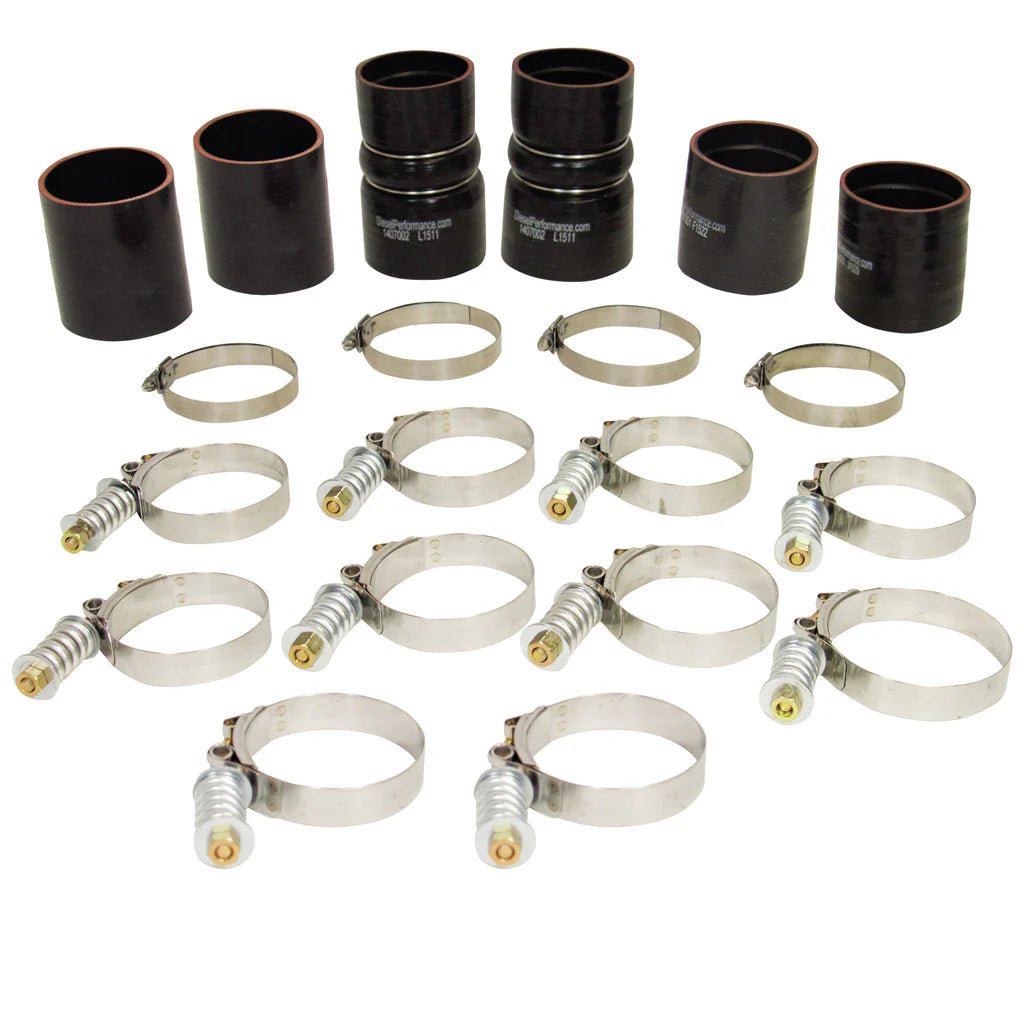
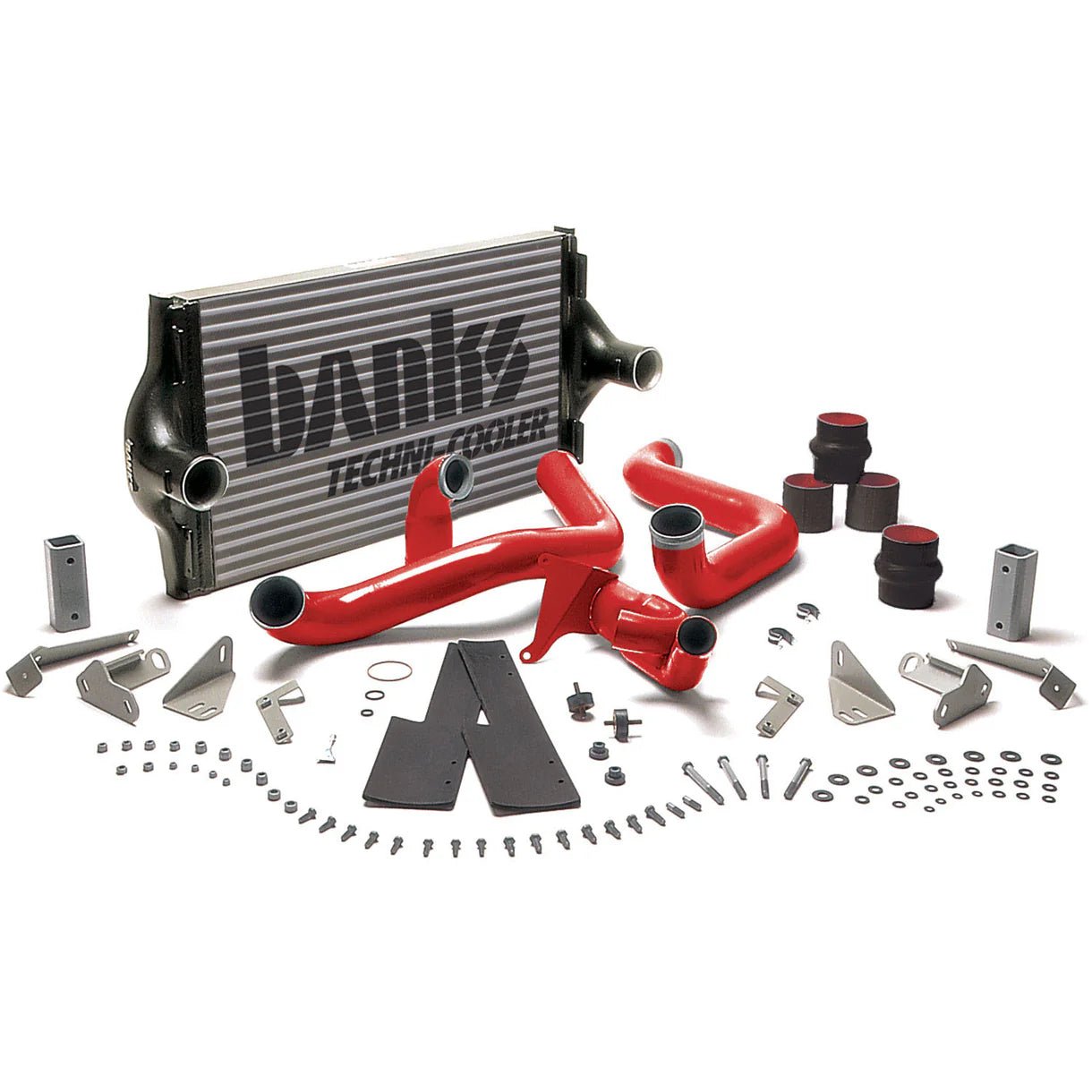
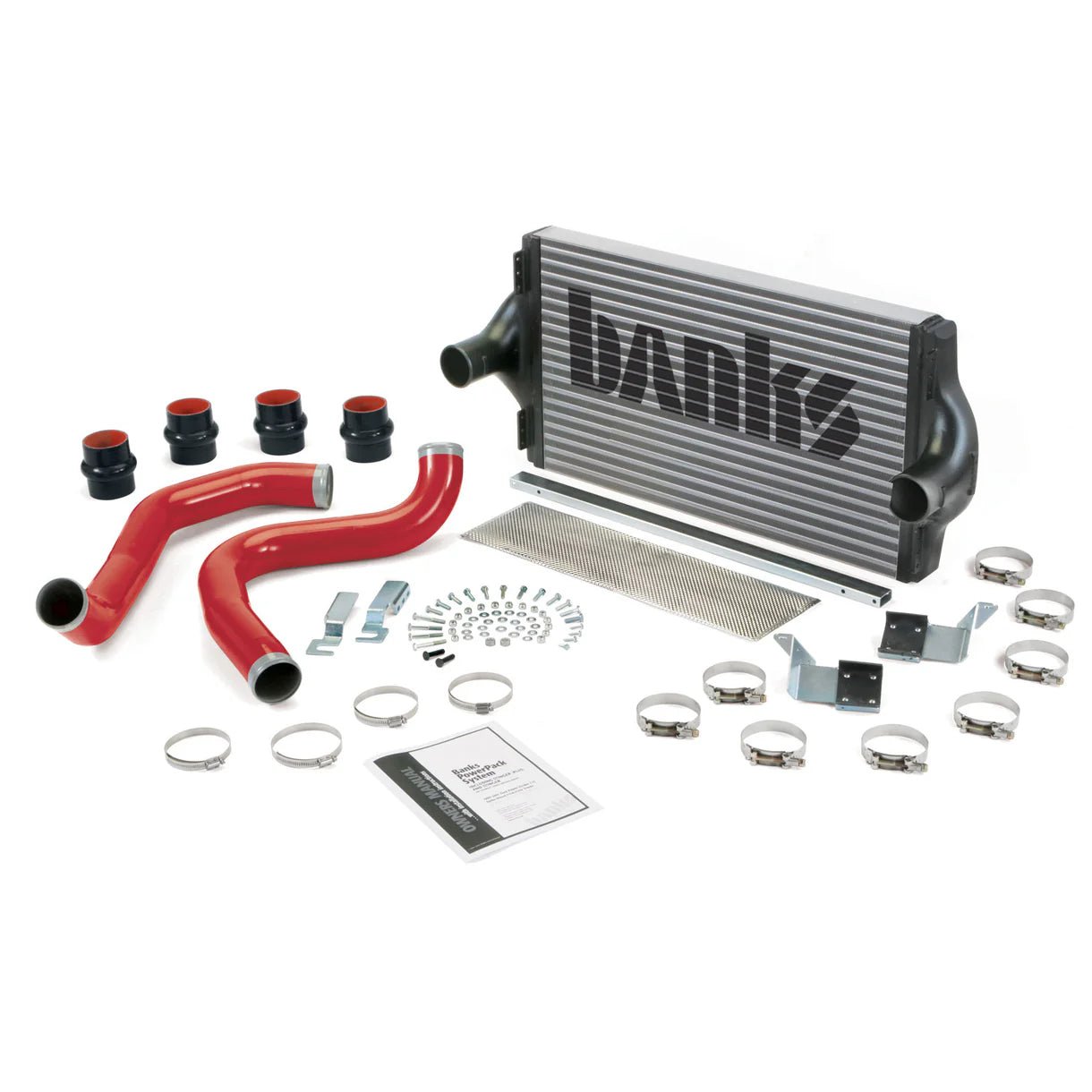
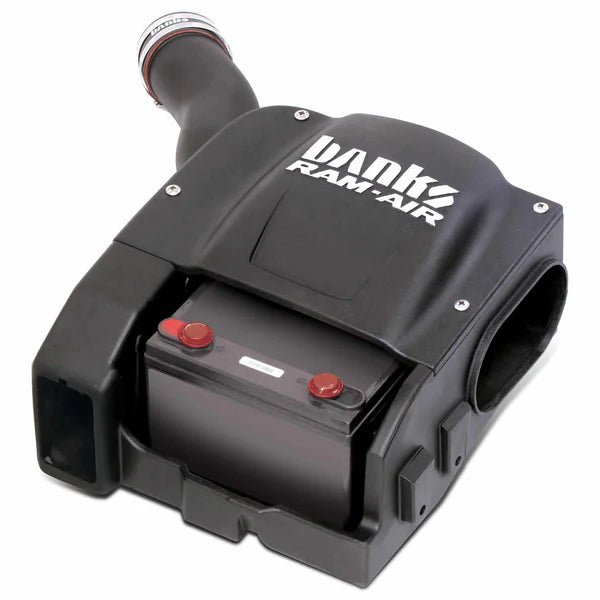
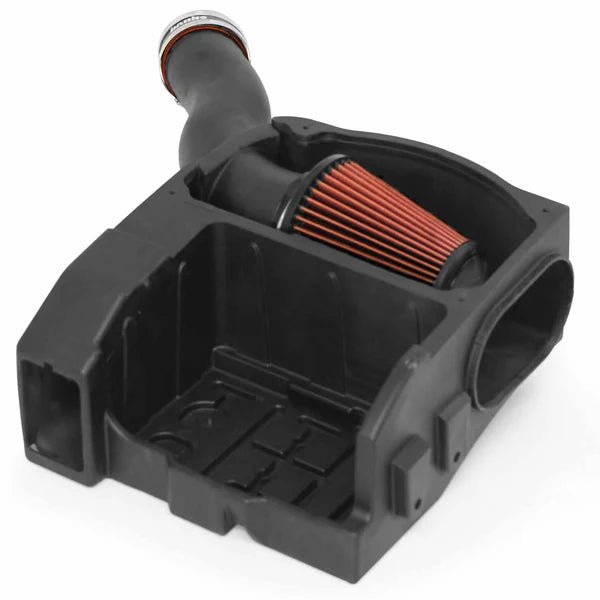
On a stock truck with tired rubber, OEM-style parts put the intake back the way Ford built it. Dorman's intake hoses, Mishimoto's factory-fit boot kit and the CSF 6029 OEM+ replacement intercooler cover that job. If you tow heavy or run a tune, upgrade the weak links instead of replacing them in kind. The S&B 83-2011 hot and cold side boot kit uses 4-ply aramid-reinforced boots. BD Diesel's 1047030 kit pairs new charge-air hoses with clamps, and its 1047020 kit replaces the factory spring clamps. Replacement intercoolers generally use bar-and-plate cores with cast aluminum tanks where Ford used plastic, and mandrel-bent 3 in charge pipes replace the factory tubing for more consistent flow. On the inlet side, an S&B sealed-airbox cold air intake is a standard first upgrade for airflow and filtration, and Banks Power makes one too.
What we carry
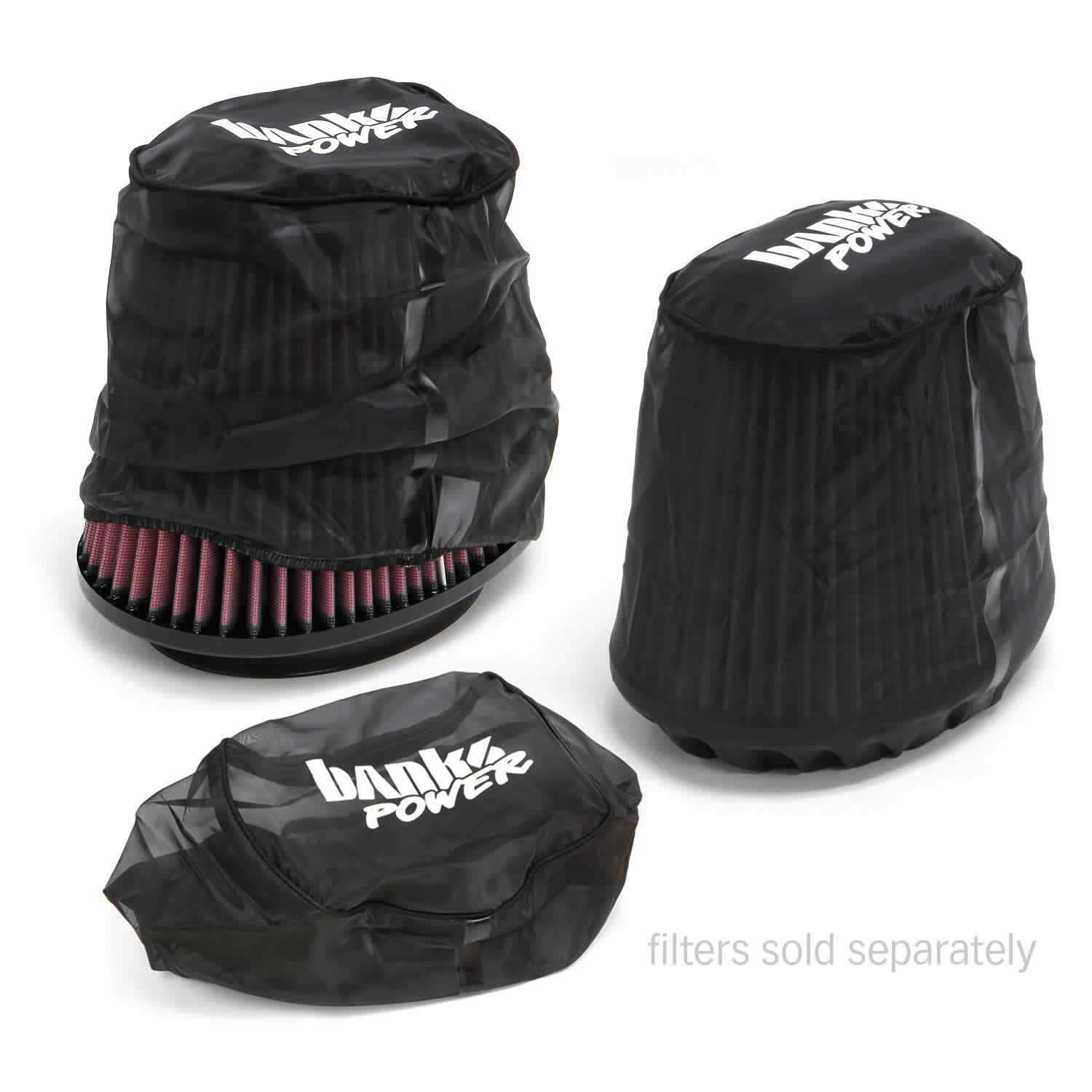
S&B covers the most ground: the 75-5131-1 cold air intake for 1994-1997, the 75-5062 for 1999-2003, KF-series replacement filters, WF-series filter wraps, the Precision II cleaning and oil kit, boot kits for both body styles and silicone couplers. Banks Power adds intercooler upgrades for OBS and Super Duty trucks plus a pre-filter wrap for its Ram-Air filters. Intercoolers and pipe kits come from Mishimoto, CSF and No Limit Fabrication, with silicone couplers from PPE. BD Diesel supplies clamp kits, charge-air hoses and a Brakeloc heat riser control, and Dorman makes stock-style intake hoses. For sensors, Alliant Power carries MAP and ambient air temperature sensors plus a 2-wire pigtail, and XDP covers MAP, air charge temperature and intake air temperature sensors. Shop every diesel intake we sell, or step back to the full Powerstroke lineup.
Fitment notes
- OBS or Super Duty. Intakes and boots for 1994-1997 are separate listings from 1999-2003, and the MAP sensors split by year the same way.
- Early 1999 vs. 1999.5. Trucks built before December 1998 count as early 1999 and have their own intake setup. Boot kits are listed 1999.5-2003 because the 5-bolt GTP38 compressor housing dictates the cold-side boot. Check your build date.
- Listings that start at 1998. Ford launched the Super Duty as a 1999 model with production starting in January 1998, so some vendors list Super Duty parts as 1998-2003. S&B's own site does this with the 75-5062.
- 2003 trucks. The 7.3L ran into early 2003 before the 6.0L Powerstroke took over, so a 2003 can have either engine. Confirm by VIN or build date.
- California. CARB EO status is not shown for most intakes, so confirm the EO number before you install one on a California truck.
- Excursion, vans and chassis cabs. The 7.3L also went into the Excursion, E-Series vans and Super Duty chassis cabs. Check the listing and verify by VIN before ordering for one of those.
Frequently asked questions
Why is my 7.3L Powerstroke down on boost?
Start with the charge-air boots and clamps. Crankcase oil mist breaks the boots down until one blows off, and the factory spring clamps loosen with age, which shows up as low boost, oily joints and black smoke under load. On 1999-2003 trucks, also look for a cracked intercooler end tank. Pressure-test the system before you buy a turbo.
Does a 1994-1997 7.3L have an intercooler?
No. The OBS trucks are non-intercooled from the factory, and Ford added the air-to-air intercooler with the 1999 Super Duty. If you want one on an OBS truck, the Banks Power 25970 intercooler upgrade is listed for 1994-1997 Powerstroke trucks.
How often should I change the air filter?
Ford's normal interval is 30,000 miles or 30 months. Inspect the filter at every oil change, and if the truck works in dust, replace it at 15,000 miles or 12 months. A pre-filter wrap is worth adding for dusty use.
Why is there oil inside my intake boots?
The factory crankcase ventilation vents into the intake, so oil mist in the boots and the Y-pipe is expected on a 7.3L. A dirty filter makes it worse by raising crankcase vacuum and pulling more oil through. That oil is also what breaks the boots down, so keep the filter on schedule and replace soaked boots.
Will a 1999-2003 intake part fit my early 1999?
Not always. Trucks built before December 1998 have an intake system that differs from late 1999, and boot kits are listed 1999.5-2003. Some parts, like the S&B 75-5062 cold air intake, are listed for 1999-2003, so read the year range on each listing against your build date or call the shop.
Not sure what fits? Call the shop at the number in the header, or use the fitment checker on any product page. We install everything we sell.