

Shop Digital Monitors by Category


Filters
2 products
Not sure it fits your truck?
Our Wildwood, FL techs will confirm the right part for your build before you buy.
Call or Text (352) 722-5295Gauges and monitors on the 1989-1993 RAM 5.9L Cummins
The first-gen 5.9L Cummins is fueled by a Bosch VE44 rotary injection pump that is gear-driven and fully mechanical. There is no ECM. The factory three-pod cluster shows speed, temperature, fuel level and oil pressure, plus a voltmeter from 1990 (it was an ammeter before that). There is no boost gauge and no exhaust gas temperature reading from the factory.
Because the pre-1996 chassis has no diagnostic port, any monitor that depends on an OBD-II connection has nothing to talk to. The documented way around that is sensors. One built D350 runs an Edge CTS2 that works only because boost, EGT, fuel pressure and temperature sensors were added to the truck. Other documented first-gens, from a W350 to a W250 and a D250, run dedicated gauges.
Why EGT comes first
Exhaust gas temperature is the reading that protects the engine. The guideline is to keep EGT under 1,250°F and avoid sustained running between 1,200°F and 1,250°F. With no pyrometer, the factory cluster gives no warning as it climbs, and owners can run high EGT without knowing it. Probe location matters too: the probe belongs in the exhaust manifold or the turbo up-pipe, because a reading taken after the turbo is always lower than what the engine is seeing. The mid-1991 air-to-air intercooler helped these trucks with towing and EGT, but it gave the driver no way to watch the number.
Monitor or dedicated gauges
There is no stock part to replace here, because the factory never measured these things. You have two paths. Dedicated gauges, one per reading, often mounted in an A-pillar or dash pod made for the 1989-1993 cab. Or a digital monitor fed by add-on sensors, which puts several readings on one screen. Either way, the sensor does the real work, so pick the readings you need and build from there: EGT first, then boost and fuel pressure.
What we carry
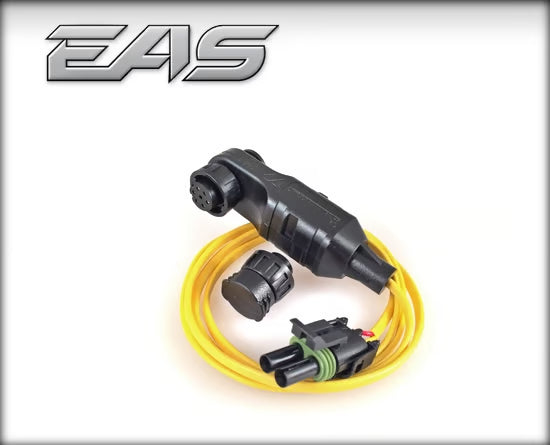
This collection carries Edge Products EAS sensors, which add readings to an Edge monitor.
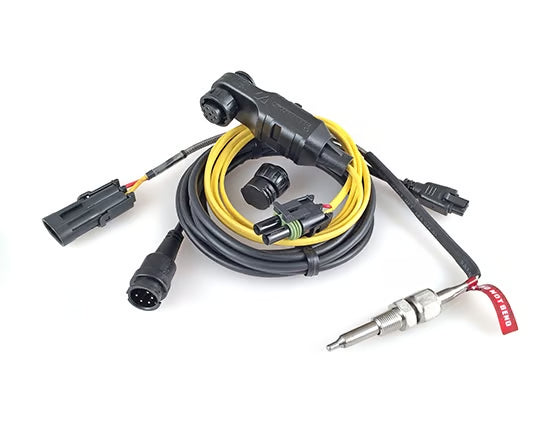
- Edge 98620 EAS EGT Kit, Daily Driver/Tow Kit: an exhaust gas temperature probe kit.
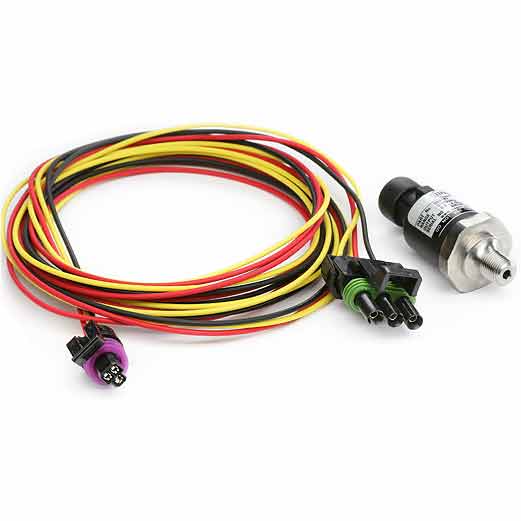
- Edge 98607 EAS Pressure Sensor (0-100 PSI): adds a pressure reading, such as boost or fuel pressure, to the monitor.
The Edge monitor itself is not part of this collection. Call the shop to confirm the monitor and sensor pairing for your truck before you order.
Fitment notes
Skip anything sold as an OBD-II plug-in for this truck; without the port it will not function. Sensor kits install on the engine, so plan the EGT probe location before you start: manifold or up-pipe, not after the turbo. Intake plumbing differs between non-intercooled trucks and those with the air-to-air intercooler that arrived in mid-1991, so look under the hood to see which you have before routing a boost line, rather than going by the model year alone.
Frequently asked questions
Will a plug-in monitor work on my 1989-1993 Cummins?
Not by plugging in. These trucks have no ECM and no diagnostic port, so OBD-II monitors have nothing to read. A monitor can still earn its place if it accepts add-on sensors, as on the documented Edge CTS2 install on a D350.
What EGT is safe on a first-gen 5.9L Cummins?
Keep it under 1,250°F, and don't hold it between 1,200°F and 1,250°F for long. That guideline assumes a probe ahead of the turbo. A post-turbo probe reads lower, so the same number would leave you less margin than you think.
Where should the EGT probe go?
In the exhaust manifold or the turbo up-pipe, ahead of the turbo. Readings taken after the turbo always run lower. If you'd rather have it installed, we install what we sell at our shop in Wildwood, FL.
Does my truck have a boost gauge from the factory?
No. The factory cluster has speed, temperature, fuel, oil pressure and, from 1990, a voltmeter, but no boost or EGT. An add-on pressure sensor such as the Edge 98607 is one way to put boost on a monitor screen.
Do these sensors change how the engine runs?
No. They only read and report. The VE44 pump on these trucks is mechanical, and these sensors don't connect to it or to anything else that sets fueling.
Not sure what fits? Call the shop at the number in the header, or use the fitment checker on any product page. We install everything we sell.