

Shop Digital Monitors by Category


Filters
2 products
Not sure it fits your truck?
Our Wildwood, FL techs will confirm the right part for your build before you buy.
Call or Text (352) 722-5295Digital monitors on the 2003-2004 Ram 5.9L Cummins
The 2003 model year was the first time the Ram 2500 and 3500 got the Bosch high-pressure common-rail 5.9L Cummins, with a CP3 pump, solenoid injectors and an electric lift pump mounted on the engine. The engine computer tracks a lot, and rail pressure and other common-rail data can be read through the OBD-II port. A scan tool comparing actual and desired rail pressure is the standard first check on a hard-start complaint. What the dash never showed you is exhaust gas temperature, boost or 48RE fluid temperature.
That gap matters because this engine will keep pulling as hard as you ask, even when it is hurting itself. The usual order for an owner adding readings is EGT first, then boost, then transmission temperature on automatic trucks, then lift-pump fuel pressure, since the 2003-2004 trucks still carry the lift pump on the engine.
What goes wrong when nobody is watching
Heat is the big one. TDR writers point to valve-seat loss as the first high-EGT casualty on a fueled or towing truck run without a pyrometer, and the sign is lost compression after hot pulls. Diesel Hub's guidance is to stay below 1,250°F and not sit in the 1,200-1,250°F band for long stretches. TDR writers use 1,300°F as a working line, with a maximum of 1,450°F on 2003-2004 engines.
The 48RE automatic has its own limit. Fluid above 260°F triggers protective downshifts, and NextGen recommends staying under 190°F for good shift quality. You only know where you are if you can read it. On the fuel side, a pressure sender bolted straight to the engine tends to fail from heat and vibration, and without a snubber the fuel pulsations make the needle jump.
Analog gauges or a digital monitor
There is no factory gauge to replace, so this is a choice between two ways of adding readings. The analog route is a pyrometer, boost and trans-temp set in an A-pillar pod for a factory-looking install. The digital route is an OBD-II monitor, with the Edge Insight CTS2 as one example, that shows rail pressure and transmission data and picks up EGT through an added probe. Analog gives you a dedicated needle that is always in view. A digital monitor puts more data on one screen and grows through sensor add-ons. Either way, fuel pressure should be read through a banjo snubber with the sender moved off the engine on a flexible line.
What we carry
This collection holds sensor add-ons from Edge Products for Edge's EAS accessory system:
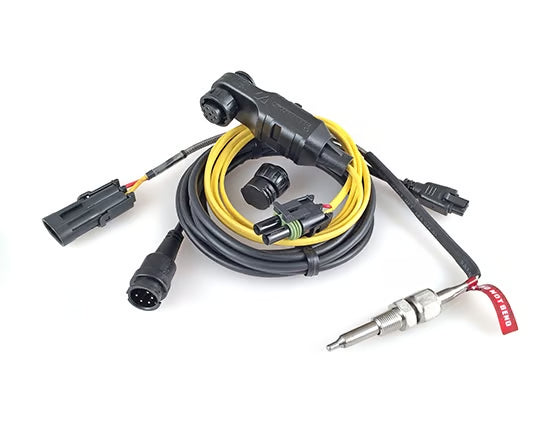
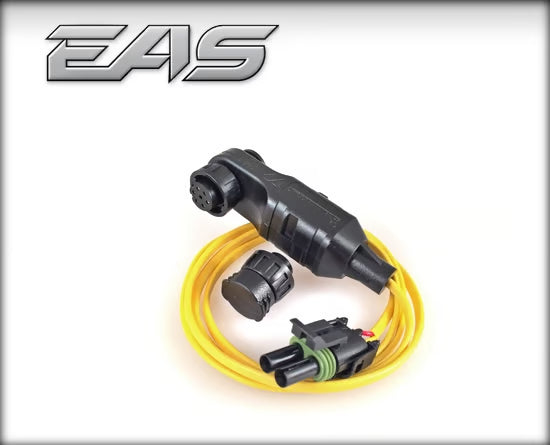
- Edge 98620 EAS EGT Kit, Daily Driver/Tow Kit: the exhaust temperature probe kit, for the reading the factory left off this truck.
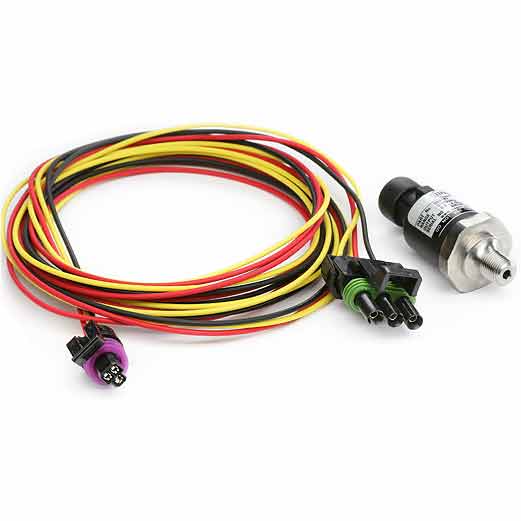
- Edge 98607 EAS Pressure Sensor, 0-100 PSI: a pressure sender for adding a second reading, such as lift-pump fuel pressure.
These are sensors, not a screen. They add readings to an Edge monitor setup, so check the product page to confirm they work with the monitor you run or plan to buy.
Fitment notes
The EGT probe has to sit before the turbo, in the exhaust manifold or the turbo up-pipe. Temperatures after the turbo always read lower, so a probe in the downpipe gives false security. For lift-pump pressure, tap at the CP3 or the filter housing with a 12 mm banjo snubber and mount the sender remotely on a flexible line; the stock 2003-2004 pump should hold around 5 psi at full power. Everything here is for the Dodge Ram 2500 and 3500, not the Ram 1500. Trucks built after the mid-2004 change to the 325 hp Cummins 600 High Output carry a 1,500°F ceiling instead of 1,450°F, so know which side of that line your truck falls on. Verify by VIN and use the fitment checker. We install everything we sell at our shop in Wildwood, FL.
Frequently asked questions
Where does the EGT probe go on a 2003-2004 5.9L Cummins?
Before the turbo, in the exhaust manifold or the turbo up-pipe. Post-turbo temperatures always read lower, so a downpipe probe can tell you everything is fine while the engine runs hot. A pre-turbo reading is the one that lines up with the published limits.
What EGT is too hot for this engine?
Diesel Hub says keep it below 1,250°F and avoid sitting between 1,200°F and 1,250°F for long. TDR writers work to 1,300°F, with a maximum of 1,450°F on 2003-2004 engines. Valve-seat loss is the first casualty they point to when a fueled or towing truck is run hot without a gauge.
Do I need a transmission temperature reading on the 48RE?
If you tow, it earns its place. The 48RE starts protective downshifts once fluid passes 260°F, and NextGen recommends keeping it under 190°F for shift quality. The factory dash does not show fluid temperature on these trucks, so a gauge or monitor is the only way to see it climbing.
Why does my fuel pressure needle bounce, or the sender keep failing?
Senders mounted directly on the engine fail from heat and vibration, and fuel pulsations make the needle jump when there is no snubber. The fix is a 12 mm banjo snubber at the CP3 or filter housing and a flexible line that moves the sender off the engine.
Can a digital monitor read rail pressure on these trucks?
Yes. Rail pressure and other common-rail data are available through the OBD-II port on 2003 and later trucks, and watching actual versus desired rail pressure is the standard check on a hard start. An OBD-II monitor shows that data, and an EGT probe kit like the Edge 98620 adds the exhaust temperature.
Not sure what fits? Call the shop at the number in the header, or use the fitment checker on any product page. We install everything we sell.