

Shop Digital Monitors by Category


Filters
2 products
Not sure it fits your truck?
Our Wildwood, FL techs will confirm the right part for your build before you buy.
Call or Text (352) 722-5295Monitoring the 1994-1998 Ram 5.9L Cummins
The 12-valve Cummins in these trucks is fed by the Bosch P7100, an inline mechanical injection pump with no electronics. There's no engine computer, and the factory cluster gives you no boost readout and no exhaust gas temperature (EGT) readout. On the 1998.5-up 24-valve, an OBD-based monitor can read engine data. On a 12-valve there's nothing for it to read.
So monitoring on this truck is sensor-based. The standard pillar setup covers boost, EGT, fuel pressure and transmission temperature, and each reading needs its own hardware. Boost comes from a line and fitting at the intake horn. EGT comes from a pyrometer thermocouple in a bung in the exhaust manifold. Fuel pressure comes from a sender on the 1/8 NPT port at the fuel filter head.
Why EGT comes first
The risk on this platform isn't a monitor failing. It's running without one. On a 12-valve whose fueling has been changed from stock, running with no EGT data is the most common cause of heat damage. When Diesel World ran a tow test on a stock-turbo truck with no gauges, they left fueling at stock for exactly that reason. If you tow, or the pump isn't stock anymore, a pyrometer is the first gauge to add.
Electric senders vs. mechanical gauges
For fuel pressure there are two ways to go. An electric sender on the filter head keeps diesel out of the cab. A mechanical liquid-filled gauge works too, but it brings the fuel line inside. On a truck with no engine computer, electric sensors are also how a digital display gets its numbers, because there is no data stream to tap.
What we carry
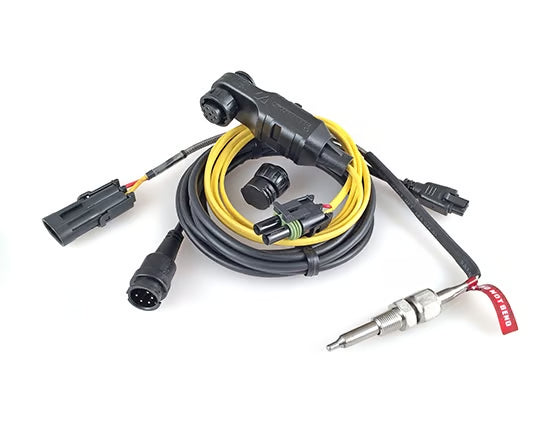
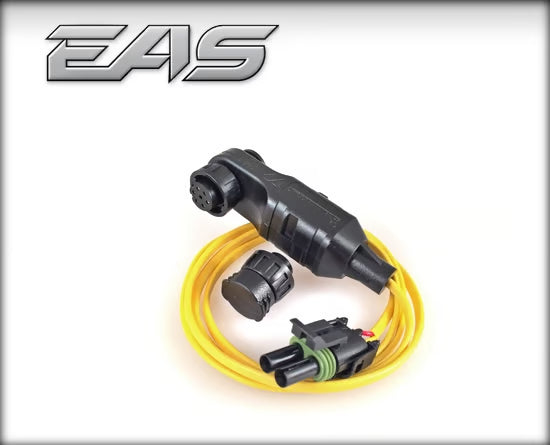
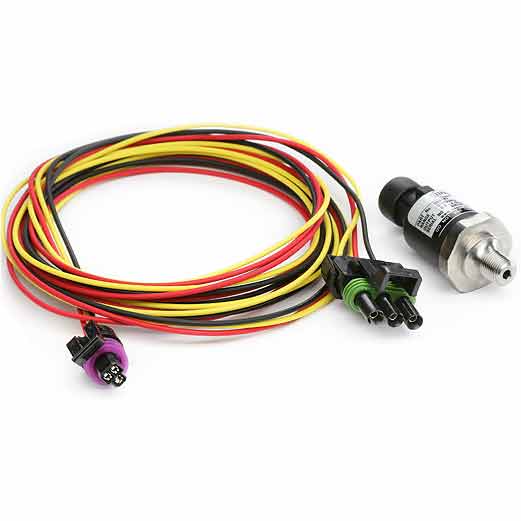
This collection holds Edge Products EAS sensor pieces. The 98620 EAS EGT Kit is sold as the Daily Driver/Tow Kit and adds an exhaust temperature reading. The 98607 EAS Pressure Sensor has a 0-100 PSI range, for a pressure reading such as boost or fuel pressure. Both read directly from a sensor rather than from engine electronics, which is the only kind of monitoring a 12-valve can use.
Fitment notes
Model year 1998 is split. The 12-valve ran into mid-1998, then the 24-valve ISB with the electronic VP44 pump took over, and that engine works with OBD-based monitors like the Edge CTS. Check your pump: a P7100 inline pump with a mechanical shutoff solenoid on top means 12-valve. EAS sensors show their readings on a compatible Edge display, so call us before ordering and we'll confirm the display side will work on your truck.
Frequently asked questions
Can I plug a digital monitor into my 12-valve and read engine data?
No. The P7100 engine has no ECM, so OBD-based monitors that read engine data on 1998.5-up 24-valves can't read a 12-valve. On this truck, every number you see comes from a sensor you install.
Which gauge should I add first?
EGT. Running a 12-valve with fueling changes and no exhaust temperature data is the most common cause of heat damage on these engines. A pyrometer thermocouple in the exhaust manifold shows you when the engine is getting too hot under load.
Where does a fuel-pressure sender mount?
On a 1/8 NPT port at the fuel filter head. An electric sender there keeps fuel out of the cab, which is the main reason to choose it over a mechanical liquid-filled gauge.
How do I tell if my 1998 has the 12-valve?
Look at the injection pump. The 12-valve uses the P7100 inline pump with a mechanical shutoff solenoid on top. The 24-valve that replaced it mid-1998 uses the VP44 rotary pump with a wiring harness. Model year alone won't tell you.
Not sure what fits? Call the shop at the number in the header, or use the fitment checker on any product page. We install everything we sell.