
Shop Parts by Category
Pick a category to narrow your truck down, or scroll to browse every part that fits.





















Filters
878 products
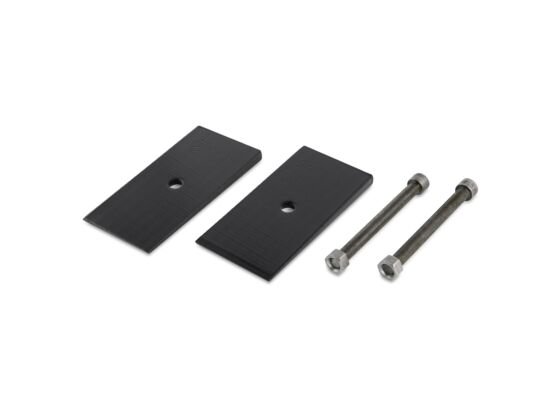
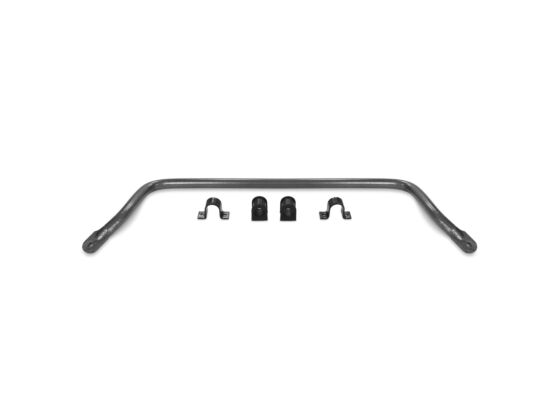
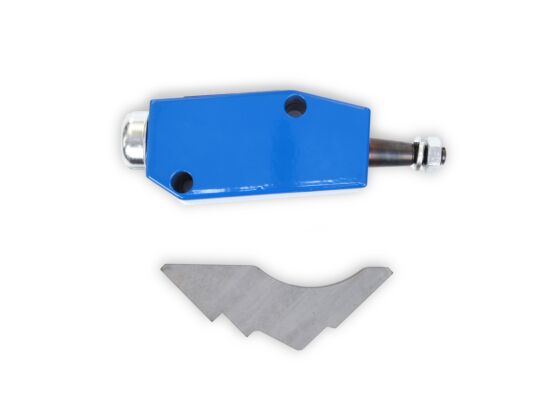
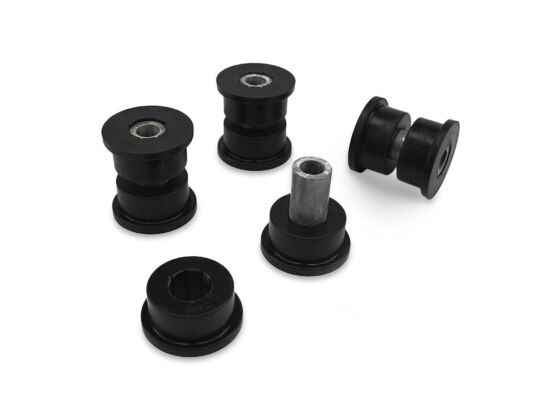
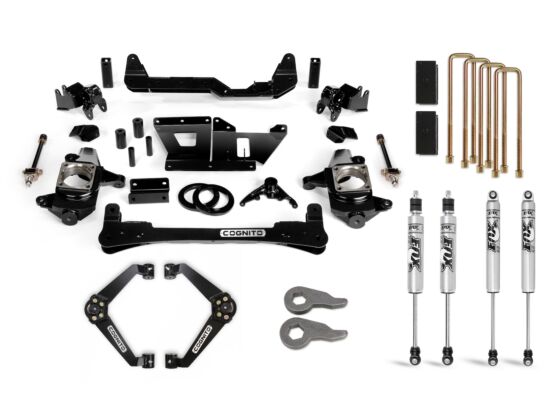
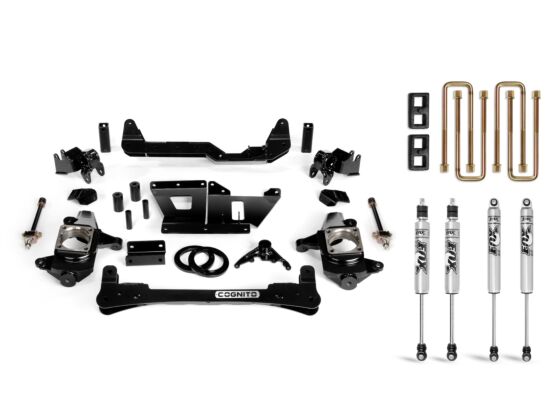
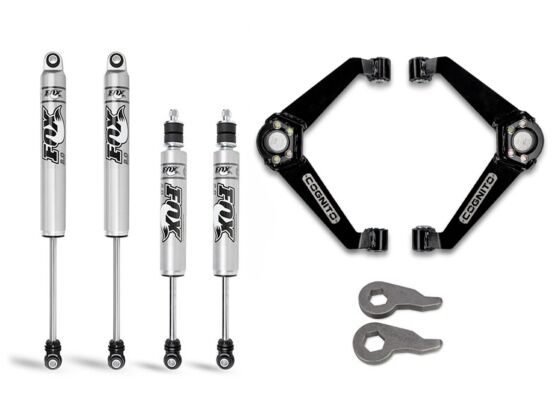
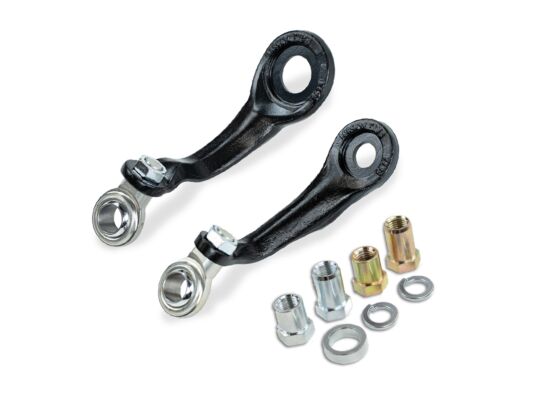
Not sure it fits your truck?
Our Wildwood, FL techs will confirm the right part for your build before you buy.
Call or Text (352) 722-5295The LB7 Duramax in the 2001-2004 Sierra 2500HD and 3500
GMC launched the GMT800 heavy-duty Sierra for 2001 in SL, SLE and SLT trim; there was no Denali on an HD pickup in these years. The engine was new too: the 6.6L Duramax LB7, built by DMAX Ltd., the GM and Isuzu joint venture in Moraine, Ohio, with engine production starting in July 2000. It replaced the 6.5L Detroit diesel in the old GMT400 trucks. The LB7 is a 90-degree pushrod V8 with a deep-skirt cast-iron block, induction-hardened bores, aluminum four-valve heads, a forged crank and forged rods, and 17.5:1 compression, rated 300 hp at 3,100 rpm and 520 lb-ft at 1,800 rpm. Behind it sat either the Allison 1000 five-speed automatic (RPO M74) or the ZF S6-650 six-speed manual (RPO ML6), both held to 520 lb-ft of input torque. Almost everything interesting lives in the engine valley: the gear-driven Bosch CP3 at the front, the IHI RHG6 fixed-geometry wastegated turbo at the rear, which is the only Duramax turbo without variable vanes, and eight solenoid injectors tucked under the valve covers in brass cups along with their high-pressure lines and harness. There is no electric lift pump, so the CP3 pulls fuel out of a 26-gallon tank by suction through the frame-mounted filter head. Underneath, a full-floating AAM 11.5-inch rear axle with 3.73 or 4.10 gears carries the load, and four-wheel-drive Sierras use an AAM 9.25-inch independent front differential. On emissions hardware the LB7 is simple: 2001 trucks and 2002-2004 federal trucks (RPO FE9) have no EGR valve and no catalytic converter, and 2002-2004 California trucks (RPO YF5) add an ECM-controlled EGR valve with a cooler plus a catalytic converter.
What fails and why
Start with heat, because on a Sierra that tows in Florida it shows up first. The early water pump has let its seal go as soon as 75,000 miles, and the LB7's radiator and fan are smaller than what GM fitted from 2006 on, so a fan clutch that free-wheels when hot, a cooling stack packed with grass and bugs, or a tired pump turns into a temperature gauge that climbs only on grades and in traffic. There are two thermostats in the crossover housing, front and rear, and they are different part numbers. If the upper hose goes rock hard, the overflow tank bubbles, or you lose coolant with nothing on the ground, stop looking at the cooling system and check the head gaskets: the original multi-layer steel gaskets usually give up past 100,000 miles, sooner on a truck that has been tuned or cooked, because the aluminum heads lift under cylinder pressure. While the hood is up, put a dial indicator on the harmonic balancer, since the rubber isolator degrades with oil and age and the outer ring starts to wobble; runout should stay under 0.005 in, and a failed balancer can throw the belt or break the crank snout.
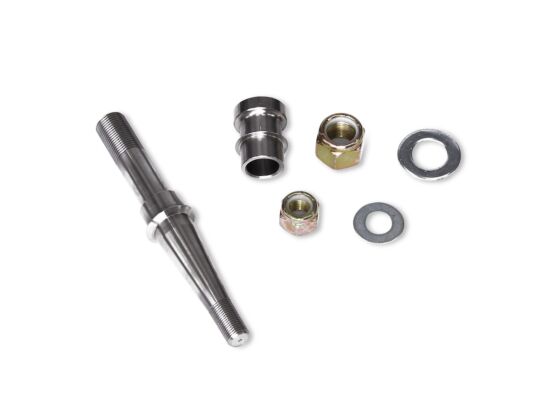
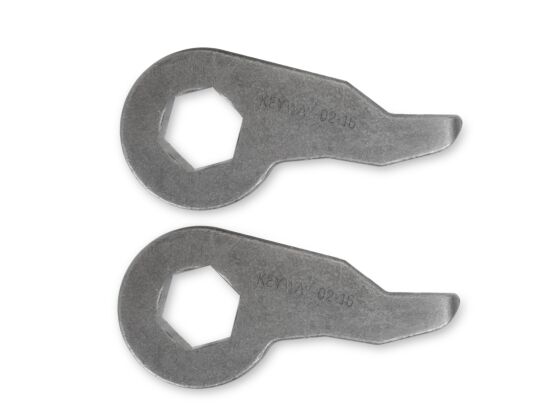
The front end is next. The recirculating-ball box, pitman arm, center link and frame-mounted idler pivot were marginal for a 9,200-lb-GVWR truck when new, and once the idler and pitman pivots wear, the tie-rod angles change and tie rods bend or snap. More than an inch of free play at the wheel, wandering at highway speed and feathered tire wear are the tells, and leveling keys with 33- to 35-inch tires speed all of it up. A loose idler can move enough to rub the transmission cooler lines. Ball joints, control-arm bushings and hubs on the torsion-bar front end are usually due by 150,000 miles and much sooner on a leveled truck, and leveling keys installed without correcting upper-arm and ball-joint angle put the geometry out of spec and eat CV joints. On four-wheel-drive Sierras the transfer case has a failure all its own: the internal fluid pump slowly machines into the back half of the housing until it leaks, which is why shield kits exist. Check the RPO before ordering transfer-case parts.
Electrical trouble on these trucks is usually voltage rather than parts. Two batteries feed the starter, the glow plug system with its heat-shielded controller, and an intake pre-heater, and when they are weak, mismatched or sitting on corroded grounds you get long cold cranking, white smoke that clears as it warms, Class 2 serial data faults with U0105 codes, a cluster that reads wrong, and sometimes a transmission that limps with nothing mechanically wrong. An aftermarket radio, especially a GPS head unit, can do the same thing. The Allison is strong at stock power, but the factory torque converter is its weak link: the thin stator cracks and the soft front cover balloons, which shows up as a shudder or rumble at steady throttle and burn marks on the flexplate bolt pads. Past roughly 80 to 100 hp over stock the five-speed flares on the 4-5 upshift and then locks into third with a P0700. Cooler lines weep at the crimped rubber sections, and the valve body gets sloppy as the long shift valves wear their bores. Last on this list but first in the LB7's reputation are the original Bosch injectors. They commonly go between 60,000 and 120,000 miles, while updated-design replacements are expected to run 150,000 to 250,000. Because they sit above the head's oil drains, a leaking injector or cup seal pushes fuel into the crankcase, so a rising oil level, a diesel smell on the dipstick and an analysis showing fuel over five percent are fuel-system symptoms, not oil problems. Under the same covers the injector harness chafes through its insulation and imitates a dead injector. On the supply side, filter-head O-rings and the hand primer seal let air in rather than fuel out, which reads as a hard start after the truck sits overnight and a primer that will not hold.
Stock replacement vs. upgrade
Most of what an LB7 Sierra needs is OEM-grade maintenance done in the right order. Do the water pump, its housing and both thermostats in one visit because they share the labor, and budget for the large fan-clutch wrench. Replace the fan clutch and wash out the radiator and intercooler before you chase an overheat any further. Rebuild the fuel filter head with a fresh O-ring kit and prove it holds prime overnight before you condemn injectors or the CP3. Pressure-test or smoke-test the charge-air side before you buy a turbo, because most reports of a failing turbo on this engine end at a split boot, a soft coupler or a worn clamp, and a confirmed shaft-play or seal failure is best answered with a new or rebuilt OEM-spec RHG6 that keeps the certified configuration. Keep the Allison on fluid every 30,000 to 50,000 miles using DEXRON-VI, change the external spin-on filter every other oil change, and use genuine Allison solenoids when you are inside it. When injectors are due, do all eight as a set with new cups, copper washers, banjo seals and seal kits, and add the eight high-pressure lines past 150,000 miles. A lubricity additive and clean, dry fuel are cheap insurance on a common-rail system this sensitive.
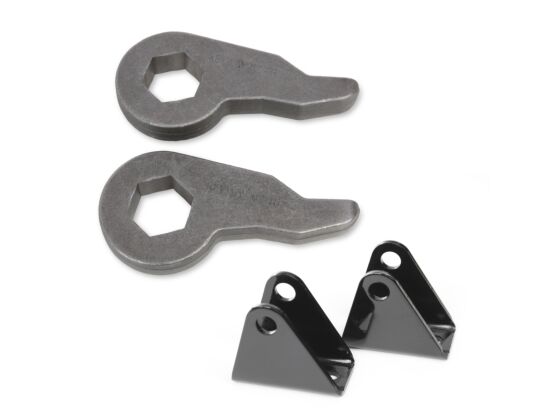
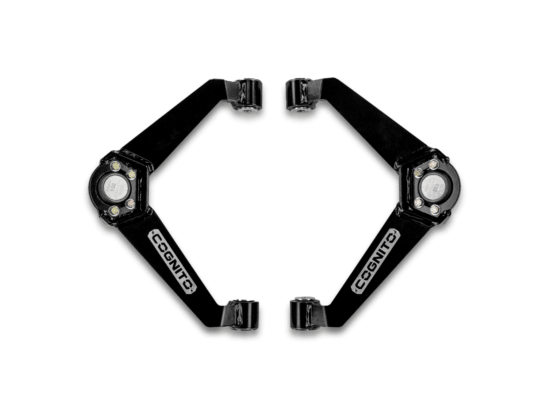
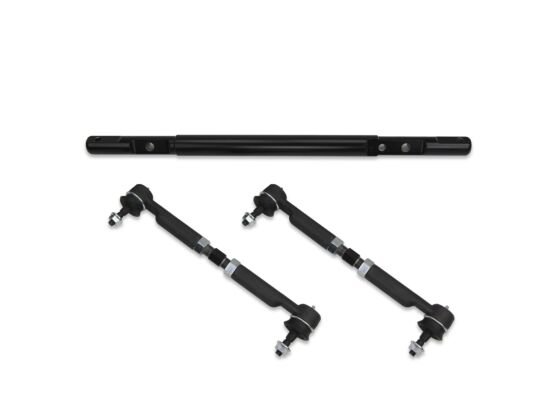
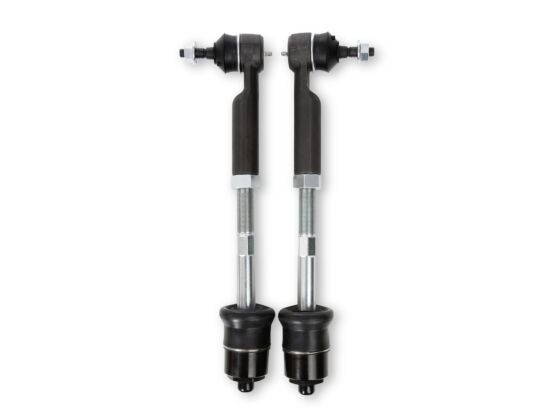
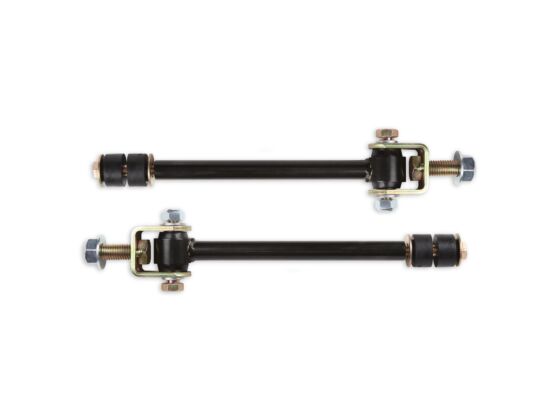
Upgrades earn their keep where GM left no margin. A frame-mount or in-tank lift pump takes the supply job off the CP3 and gives you water separation ahead of the injectors; it stops being optional once you add fueling, since more fuel without a lift pump drops rail pressure under acceleration and lets the pump cavitate. On the steering, heavy-duty tie rods, an idler support with tapered roller bearings and a fresh pitman arm are the repair that actually holds, and boxed upper control arms with matched ball joints keep a leveled truck in spec. For the transmission, a triple-disc converter with a billet stator is the first real upgrade, backed by a controller for line pressure and limp-mode control, new cooler line kits, and a tap shifter if you tow; a six-speed conversion is the long way around to a lower cruise rpm. Any time the heads come off, head studs replace the single-use torque-to-yield bolts, and remember that GM gaskets are side-specific and come in thickness grades chosen from measured piston protrusion, so measure before you order. Airflow is the other honest gain: an enclosed cold-air intake that keeps the MAF and its plate, a thicker bar-and-plate intercooler, aluminum charge pipes in place of the factory plastic, a high-flow intake horn, and cast manifolds with 2-inch stainless up-pipes and an uncrimped downpipe. On a YF5 California Sierra, keep exhaust work cat-back so the factory catalyst stays where it belongs, and order the EGR-compatible manifold and up-pipe kit. If you want tuning, keep it mild, respect the Allison's limit, and confirm the specific device carries a CARB EO for the 2001-2004 LB7.
What we carry
Grouped by the job rather than by the badge on the box. Fuel and filtration: ACDelco TP3018 filters, FASS Titanium Signature Series systems and extreme water separator filters, PPE diesel lift pumps, S&B replacement filters and the XDP fuel filter adapter wrench, with injectors on their own page. Cooling: Mishimoto radiators and cooling parts, Mahle water pump gaskets and valve cover gasket and injector seal kits, Wehrli Custom Fabrication low coolant level sensors and fastener kits, and Fleece Performance Engineering billet coolant block-off plates. Allison and driveline: Merchant Automotive converter housing reseal kits, stepper motor sets, water-in-fuel sensor O-rings, pass-through connector seals, transfer case output seals and starter solenoids, genuine Allison PTO cover gaskets, BD Diesel transmission hardware, XDP flex plate bolt kits and PPE heavy-duty PTO side plate covers. Air, turbo and exhaust: PPE intercoolers, charge-pipe and boot kits, manifold and up-pipe kits and emissions-specific stainless downpipes, MBRP mufflers and resonators, G&R Diesel turbo drain kits and Turbosmart constant-tension clamps. Gauges and calibration: Edge Products EAS EGT kits and pressure sensors, plus EFILive AutoCal and HP Tuners hardware for reading balance rates and rail pressure. Fluids and chemistry: Hot Shot's Secret engine oils, Diesel Extreme and Everyday Diesel Treatment, Lucas Oil and other fuel additives. For the bed and the hitch end, Air Lift helper springs handle rear sag under a trailer, and Big Hitch Products supplies the flip-up plate bracket. Steering, suspension and engine hard parts each have their own sections off this page.
Fitment notes
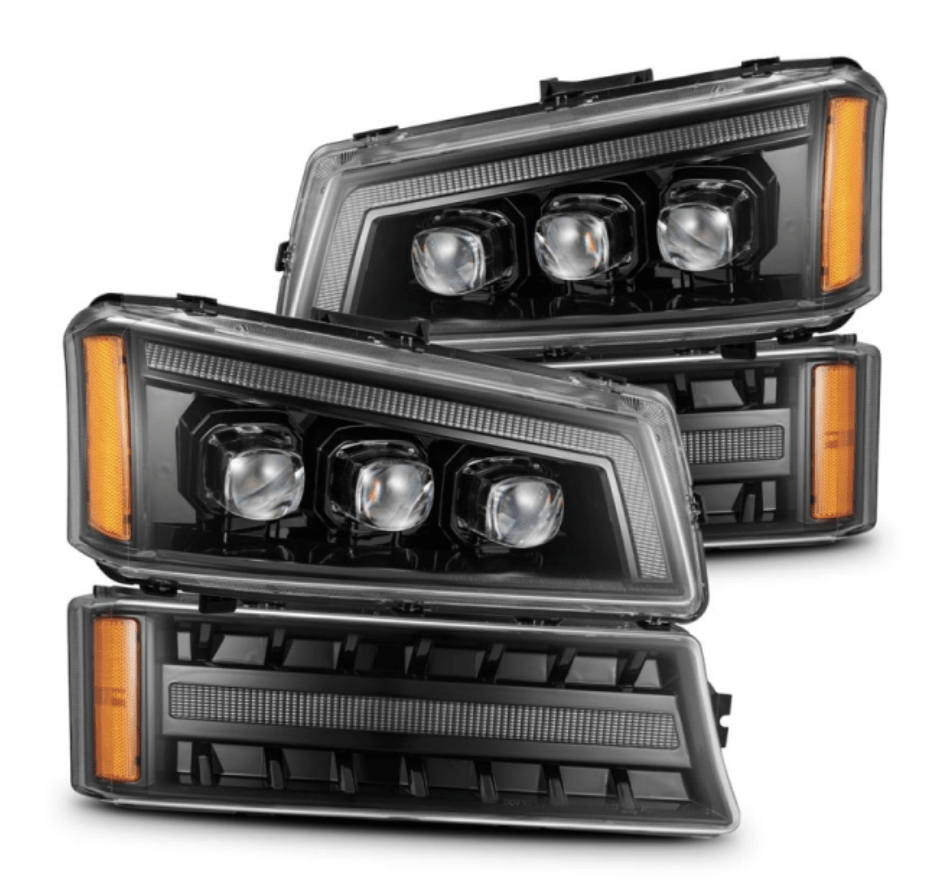
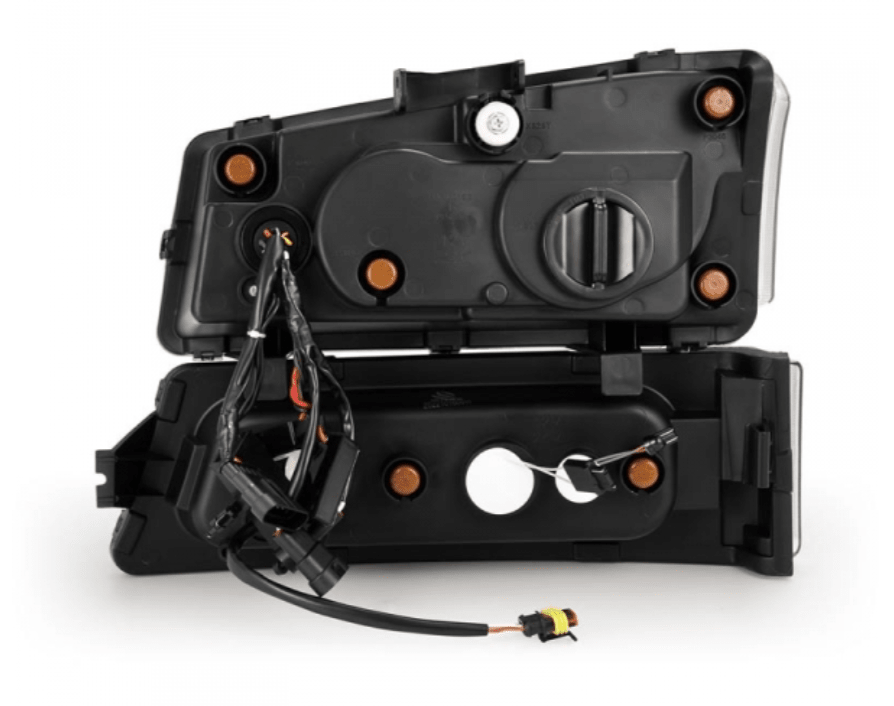
Open the glovebox first. The RPO sticker says whether the Sierra is FE9 (federal) or YF5 (California), and that one label decides exhaust manifolds, up-pipes and downpipe gaskets, because the California kit is a separate part number from 2002 on. Model year matters inside the platform too: a 2001 Sierra uses a different intake bridge and intercooler boot than a 2002-2004 truck, which is why boot kits are catalogued 2002-2004 only, while intercooler cores often span 2001-2005 and do carry over. Exhaust routing, gooseneck and fifth-wheel hardware follow cab and bed, across regular, extended and crew cab with 6.5-ft and 8-ft beds plus dual-rear-wheel 3500s, and a crew cab short bed generally wants a slider under a fifth wheel. Factory wheels are 16 x 6.5 steel on both trucks, but the offsets are not the same: single-rear-wheel Sierras run ET28 with about 4.84 inches of backspace while dual-rear-wheel 3500s run ET125 with 8.66 inches, both on the 8-lug 8x165.1 mm pattern with roughly a 116.7 mm center bore, so a DRW wheel will thread onto an SRW truck and still be the wrong part. The 2003 refresh is the other dividing line: front sheet metal, grille, bumper, headlight and tail light housings and the audio and HVAC trim all split there, so a 2001-2002 Sierra and a 2003-2004 Sierra are not the same truck to a lighting catalog, and DRW tail lights differ again from SRW. Hub and wheel bearing listings split 2001-2007 Classic from 2007.5-2010, so stay in the earlier range. Then the engine itself: GMC sold 2004 Sierras with either engine, so read the eighth digit of the VIN, where 1 is an LB7 and 2 is an LLY, before buying valve covers, injectors, a turbo or anything the ECM touches. LB7 injectors, lines and return hardware are LB7-only, and the LLY's injectors are longer and mount outside the covers. Two trucks this page is not for: the LB7 came only in the 2500HD and 3500, never a 1500 or 1500HD, and the 2003-2004 TopKick C4500/C5500 used the LB7 under the LRY medium-duty option at 210 hp at 2,750 rpm and 520 lb-ft at 1,600 rpm, so pickup listings should not be assumed to carry over to it. When anything is uncertain, verify by VIN.
Frequently asked questions
My Sierra wanders at highway speed and the steering feels loose. What is worn?
On a GMT800 HD it is almost always the idler and pitman pivots first, and then the tie rods they pull out of line. More than an inch of free play at the wheel, feathered tire wear and a visibly bent tie rod all point the same way, and a loose idler can move far enough to rub the transmission cooler lines. Heavy-duty tie rods plus an idler support kit fix it properly; new tie rods on worn pivots will bend again.
Why does my Allison lock itself into third gear?
That is limp mode. The TCM drops to third, commands maximum line pressure and cuts solenoid voltage, and it sets a P0700 along with whatever slip or ratio codes it logged. On a stock Sierra it usually means the transmission is genuinely due; on a tuned one it turns up quickly past roughly 80 to 100 hp over stock. Check batteries, grounds and cranking voltage first, because a Class 2 data fault can put the box in limp with nothing actually slipping.
Will 2001 charge-pipe boots fit my 2003 Sierra?
No. The 2001 trucks use a different intake bridge and a different intercooler boot, while 2002, 2003 and 2004 take a straight boot and different pipe lengths. That is why boot kits are listed 2002-2004 rather than 2001-2004. Intercooler cores are the looser part here, since those listings often cover 2001-2005, but confirm the boots and pipes separately from the core.
My Sierra cranks but will not start and the gauges read wrong. Where do I look?
Voltage and the data bus, in that order. Low cranking voltage from weak or mismatched batteries and corroded grounds corrupts the Class 2 serial network, which sets U0105 and makes the cluster report nonsense. Load-test both batteries together, clean every ground and measure voltage drop across the main cables while cranking. If an aftermarket radio or GPS unit was installed, pull its fuse to rule it out before you buy modules.
What is the fuel filter interval on an LB7?
The frame-mounted filter is the ACDelco TP3018 and the LB7 schedule calls for it every 15,000 miles. Oil is 10 quarts with the filter on a 10,000-mile or twelve-month interval, or whenever the oil-life monitor calls for it, and the air filter is a 45,000-mile item. On a truck with no factory lift pump, that filter head is the only thing standing between the tank and a set of injectors, so do not stretch the interval.
Can my Sierra 3500 pull 15,000 pounds?
Ratings for these trucks run around 12,000 lb conventional and 15,800 lb fifth-wheel, but they move with cab, bed, two- or four-wheel drive and axle ratio, so read the label on the door jamb rather than a generic figure. The five-speed Allison is the part that feels heavy work: transmission heat and gear hunting on grades are the usual complaints, which is why a tap shifter, cooler line upgrades and a better converter are the common towing additions.
Not sure what fits? Call the shop at the number in the header, or use the fitment checker on any product page. We install everything we sell.