
Filters
1046 products


Not sure it fits your truck?
Our Wildwood, FL techs will confirm the right part for your build before you buy.
Call or Text (352) 722-5295The 6.7L Cummins in the 2010-2018 Ram 2500 and 3500
The 6.7L Cummins ISB is a cast-iron inline six: cam in block, four valves per cylinder, solid roller lifters and adjustable valve lash. 2010 was the first year of the redesigned fourth-generation Heavy Duty body, and the Crew Cab joined the Regular Cab and Mega Cab. The engine started at 350 hp with 650 lb-ft behind the 68RFE automatic and 610 lb-ft behind the G56 manual, and mid-2011 the automatic trucks were bumped to 800 lb-ft. The brand itself split from Dodge to Ram for 2011, so a 2010 wears Dodge badges and a 2011 does not. Every pickup in these years uses a Bosch CP3 injection pump, not the CP4.2 that came with the 2019 fifth-generation HD, which is why a 2010-2018 truck does not need any of the CP4 conversion hardware sold for 2019-2020 trucks. Body configuration drives a lot of fitment on this page: Regular Cab with the 8-foot bed on a 140.5-inch wheelbase, Crew Cab with either the 6-foot-4 or the 8-foot bed, and Mega Cab on 160.5 inches with the short bed only, since there is no long-bed Mega Cab. The 3500 came as single or dual rear wheel. You can browse the rest of our Cummins catalog if your truck is from another generation.
What changed in 2013
2013 was a mid-cycle overhaul, not a facelift. The frame got hydroformed main rails and fully boxed rear rails. The front suspension went wider and stronger with a revised steering gear and linkage, and 4x4s gained a front-axle disconnect. SCR with diesel exhaust fluid replaced the NOx adsorber arrangement the 2010-2012 pickups used, and service intervals stretched to 15,000 miles. The 3500 could be ordered with the 385 hp High Output engine behind the Aisin AS69RC six-speed, rated 850 lb-ft for 2013-2014 and climbing to 865, then 900, then 930 lb-ft for 2018, with a 30,000-pound fifth-wheel rating and available factory fifth-wheel and gooseneck prep. Under the hood the turbo changed from the Holset HE351VE to the HE300VG, and a second chassis-mounted fuel filter was added on the frame rail near the tank. For 2014 the 2500 traded rear leaf springs for a five-link coil setup with optional rear air suspension. Figure out which side of 2013 your truck sits on and most of the fitment questions below answer themselves.
What fails and why
The headline item is the grid heater. That intake air heater pulls roughly 200 to 225 amps on a cold start, and the fastener on its high-current terminal works loose from heat cycling, vibration and arcing. Because the engine sits at a five-degree rake, a dropped fastener rolls toward cylinder 6 and ends the engine. It has been documented as early as 40,000 miles, every 2007.5-2024 truck is exposed, and most reports surfaced after 2013 as these trucks passed 100,000 miles. Codes P2609 and P0542 are the warning you might get, and often there is none. Head gasket lift is more common on the 6.7L than it was on the 5.9L, blamed either on higher cylinder pressure or on the larger bore leaving less sealing area. It usually shows in the cooling system first: a stiff, pressurized upper radiator hose on a cold morning, overheating that acts like an air pocket, coolant pushed out of the degas bottle. Cast exhaust manifolds shrink through heat cycles even on stock trucks, which snaps manifold bolts and leaves a cold-start tick, an exhaust smell in the cab and soot streaks at the flange; owner reports cluster between 50,000 and 115,000 miles. On the turbo side, soot, oil and ash coat the variable-geometry nozzle ring until it seizes, giving you lag, low boost and a weak exhaust brake with P226B or P226C, while the electronic actuator is its own common failure with boost dropping to nothing, the exhaust brake quitting or sticking on, and P00AF almost always pointing at the actuator. An exhaust brake that stays engaged under acceleration loads the turbo and cylinders hard enough to contribute to a blown head gasket. The 68RFE automatic is the drivetrain weak link, with failures landing between 50,000 and 150,000 miles and the worst of it on 2007-2011 trucks, before the 2012 converter and shift-strategy updates. Oil that climbs above full between changes is part of life with this regeneration strategy, since post-injected fuel washes past the rings; Ram accepts up to five percent fuel in the oil, and short trips plus heavy idling make it worse, so finish an active regen at highway speed, keep idling down and pull a sample before the interval if you want to watch it. Front ends on these trucks earn their reputation: soft track bar bushings let the axle shift side to side, which is the leading cause of death wobble, and on 2013-and-newer trucks the factory bar is expected to need replacing around 20,000 miles. Then there is the recall list worth running by VIN, including the 2013-2017 Concentric water pump (17V-562), the fuel heater connector on 2010-2014 trucks (14V-635), the drag-link jam nut on 2013-2018 3500s and 2014-2018 2500s (19V-021), the 2015 track bar frame bracket welds (16V-559) and the 2017-2018 ABS hydraulic control unit (24V-896).
Stock replacement vs. upgrade
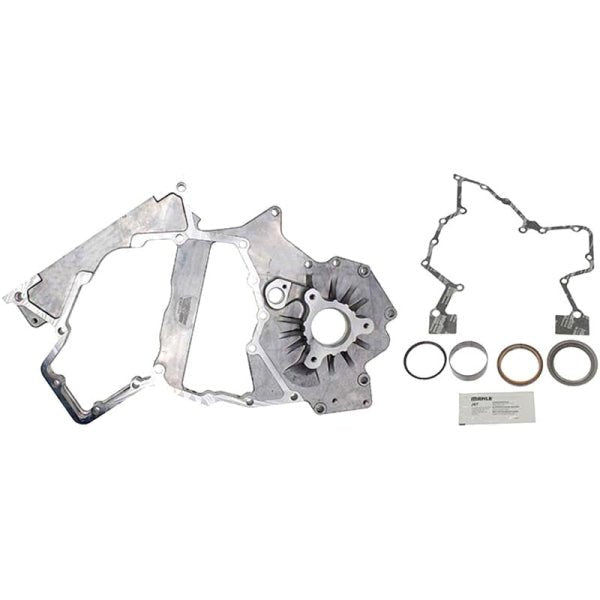
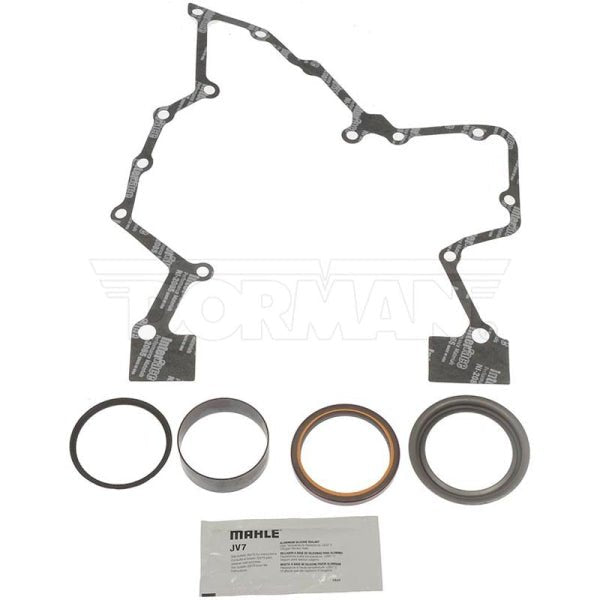
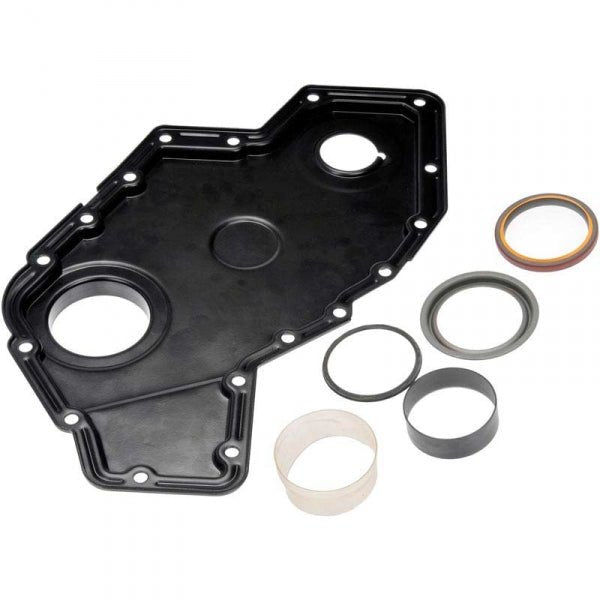
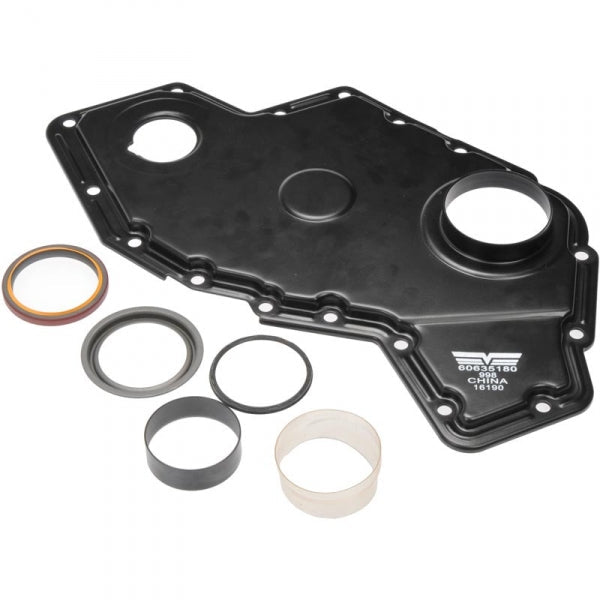
A lot of this truck is best fixed with the factory part. A genuine Cummins thermostat or CCV filter gasket, a Mahle gasket set or rear main seal: when you are closing an engine back up, OEM-grade sealing parts are the right call, and any head job should get new injector O-rings and combustion seals with valve lash set before and again after the hot re-torque. Upgrade where the factory design is the problem. Head studs are the standard insurance on a tuned or heavy-towing 6.7L, with ARP2000 or Custom Age 625+ in 26 places, torqued in three steps to 50, 100 and 150 ft-lb, then hot re-torqued with a lash reset afterward. A coil-heater intake plate trades the grid heater's high-current fastener for a 60-amp coil; Banks lists its Monster-Ram elbow as 50-state compliant, and the Fleece coil-heater kit was dyno-tested to stay within emissions guidelines and covers 2007.5-2024 in one part number. If you would rather keep the factory layout, the BD Killer Grid Heater is an OEM-style upgrade of the original assembly. Webbed aftermarket exhaust manifolds resist the shrinkage that breaks factory bolts. On fuel, the FASS drop-in system consolidates both factory filters into one serviceable 10-micron and 2-micron unit at the front of the bed while keeping the factory in-tank pump and the water-in-fuel sensor, and drop-in in-tank lift pumps replace the factory module without external pumps or lines. For airflow, the compliant parts all exist for this platform: the S&B 75-5068 intake for 2013-2018 is CARB-exempt under EO D-590-33 (75-5092 covers 2010-2012), the Banks Ram-Air 42255 is 50-state legal under D-161-134, the 25992 boost tubes under D-161-122 replace a factory hot-side tube that leaves the plant dented to roughly 2-1/4 inches, and the 25987 intercooler under D-161-153 adds core for heavy towing. Exhaust upgrades here are DPF-back, behind every emissions device, and both the Banks 5-inch 409 stainless system and MBRP's 4-inch dual-exit systems are built that way. If you want calibration, stay with tow and economy tunes that keep the EGR, DOC, DPF and SCR working, and in a CARB state confirm the Executive Order for your exact model year before you buy, because aggressive tunes load the particulate filter. A monitor is the smartest first purchase either way, since EGT, boost, soot load, regen status and transmission temperature tell you what the truck is actually doing.
What we carry
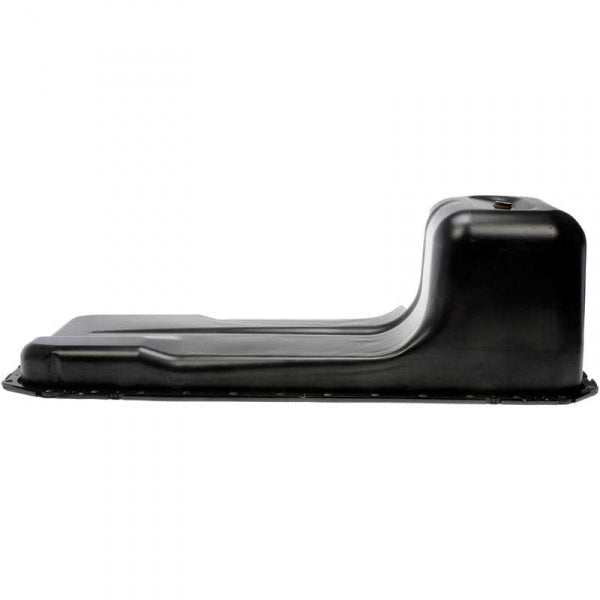
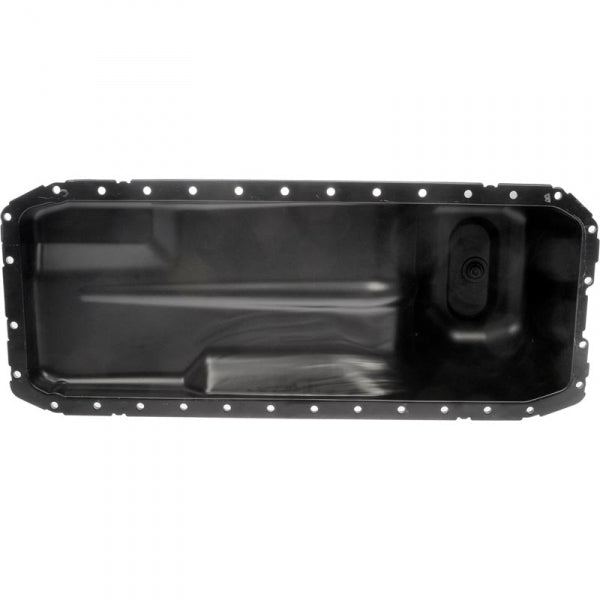
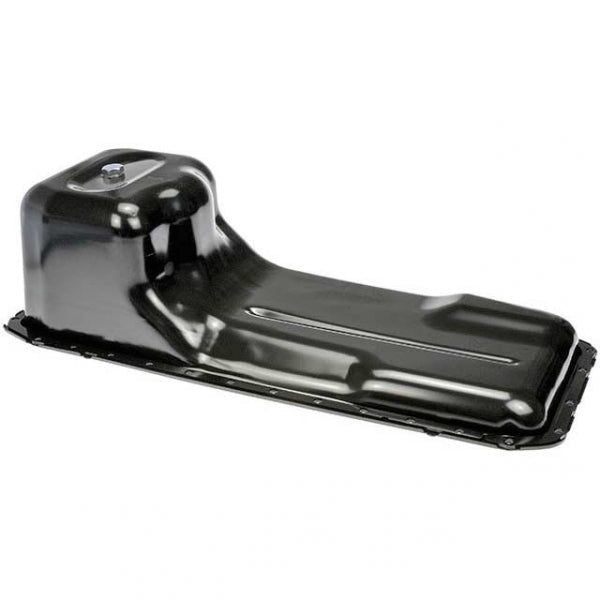
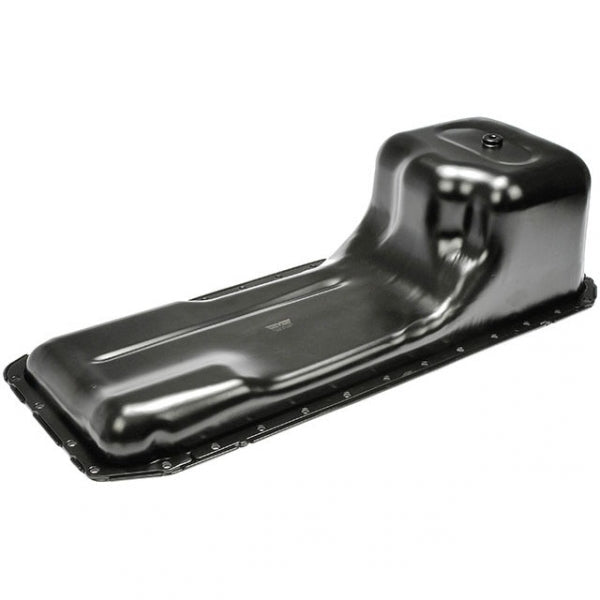
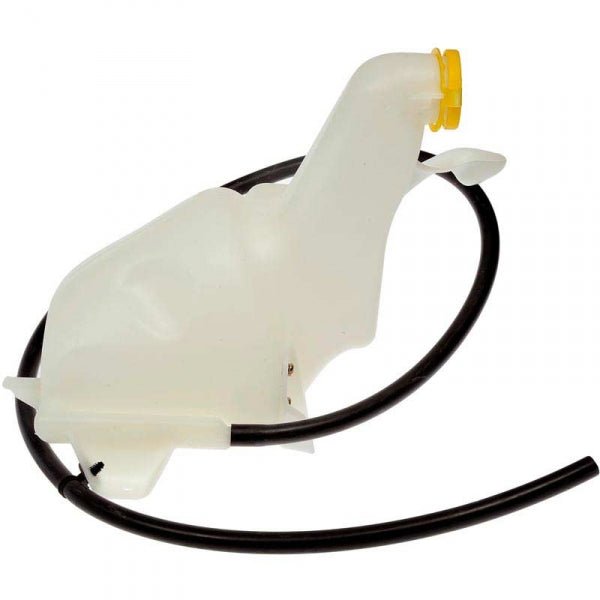
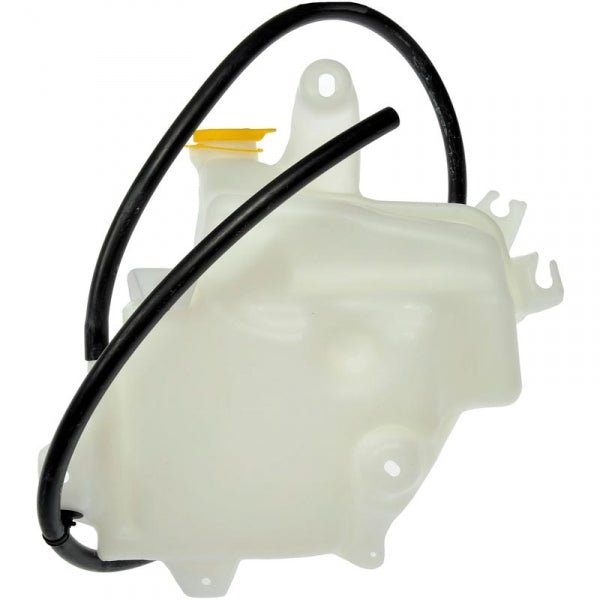
Cooling, engine, fuel, exhaust and transmission parts make up the bulk of this page. Cummins genuine parts cover thermostats, CCV filter gaskets and other service items, and Mahle handles gasket sets, rear main seals and exhaust manifold and turbo mounting gaskets. Fleece Performance Engineering brings turbo drain tube and oil feed line kits, replacement coolant tanks, fuel sending units and fuel system parts, while BD Diesel covers grid heater upgrades and flexible turbo oil drains. PPE is here for 68RFE pans and gaskets, oil filters and billet accessories, MBRP for mufflers, resonators and exhaust systems, and S&B, Banks Power and Wehrli Custom Fabrication for intake and airflow parts. Fuel work is covered by FASS filtration and fuel systems and S&S Diesel Motorsport high-pressure pumps alongside injectors. Ride and chassis come from BDS Suspension lift kits and Bilstein shocks, with Mishimoto on the cooling side and Mag-Hytec finned differential covers. Hot Shot's Secret supplies CK-4 engine oil and fuel additives, Edge Products the CTS3 monitors, EGT kits and A-pillar mounts, ATS Diesel Performance the thermal bypass valve, and XDP the hardware kits such as timing cover bolt sets. Big Hitch Products covers hidden receivers and bed hardware, and you will also find headlights and trailer hitches here.
Fitment notes
Verify by VIN before you order, because this platform splits in more places than the title suggests. High Output and standard-output engines are different builds, so match by transmission and HO status rather than year alone; the HO uses 16.2:1 pistons against 17.2:1 on 68RFE and G56 trucks, and piston, short-block and some gasket numbers differ. Fuel filters split three ways, with 2010-2012 running a single engine-mounted filter (68065608AB / FS43255) and 2013-2018 adding chassis filter 68197867AB, while the 2019-up chassis filter is a different part again. Turbos, actuators and drop-in replacements do not cross the 2012 to 2013 line because the HE351VE and HE300VG are separate parts. Chassis cab 3500, 4500 and 5500 trucks share the engine but use different frames, filters and exhaust routing, so verify those separately; Banks sells chassis-cab-specific intake components, and the Monster-Ram fits dual-alternator pickups but not chassis cabs. Single- and dual-alternator trucks also use different belts, brackets and intake-side clearances. The Banks DPF-back fits Crew Cab short and long bed and Mega Cab short bed in SRW and DRW, but not Regular Cab long bed and not trucks with factory rear air suspension. Rear suspension parts split between leaf springs on 2010-2013 2500s and all 3500s and the five-link coil on 2014-2018 2500s, with or without factory air, and air springs follow the same split while factory-air trucks are excluded. Rear axle gear and overhaul kits split between the AAM 11.5 and the 11.8 that appears on 2013-and-newer 3500s, so confirm by the axle tag and ring-gear size rather than the model year. Headlamps split 2010-2012 versus 2013-2018 and then again by projector or reflector housing depending on trim. For towing hardware, 2013-and-newer beds use in-bed puck locations for the available fifth-wheel and gooseneck prep while 2010-2012 beds need an underbed rail kit, and bed length drives hitch placement. One last thing: the Power Wagon was a gas Hemi truck in these years, never a Cummins, so nothing on this page fits one.
Frequently asked questions
Is my truck a High Output or a standard-output 6.7L?
High Output was a 3500-only option starting in 2013, rated 385 hp and 850 to 930 lb-ft depending on year, and it always came bolted to the Aisin AS69RC automatic. Standard-output trucks use the 68RFE automatic or the G56 manual. The fastest check is the transmission dipstick, which sits on the passenger side for the 68RFE and the driver side for the Aisin. It matters past the badge, since the two engines use different pistons and some different gasket part numbers.
Can I do anything about the grid heater bolt?
Yes, and it is the one preventive job worth doing on any of these trucks. There has never been a recall for the fastener itself; the 2021 recall covered sticking grid heater relays on 2021-2022 trucks, which is a different fault. The common answers are a coil-heater intake plate that removes the high-current terminal entirely, or an OEM-style upgraded grid heater assembly if you want to keep the factory arrangement. Healthy batteries and clean cables help as well, because weak cables raise the current and heat at that joint.
How many fuel filters does my Ram have?
A 2010-2012 truck has one engine-mounted filter and water separator on the driver side of the block. A 2013-2018 truck keeps that one and adds a chassis-mounted filter on the frame rail near the tank, sitting over the rear driveshaft. Both have service headaches: the plastic cap on the engine filter commonly breaks or strips on removal, especially with an aftermarket intake horn in the way, and the chassis filter's steel base corrodes until it will not seal a new filter. That is why many owners move to a drop-in system that puts both filters in one accessible housing.
Does my truck use DEF?
Only if it is a 2013 or newer pickup. The 2010-2012 pickups controlled NOx with cooled EGR and a NOx adsorber catalyst, with no DEF tank. Pickups moved to SCR with DEF for 2013, while chassis cabs had it from 2011. The difference matters beyond refills, since pre-SCR trucks ran richer and were the ones with repeated DPF clogging, 2013-2018 owners report DEF pump and level sensor faults, and monitor parameter lists differ between the two groups.
My steering wanders and it shakes hard after I hit a bump. Where do I start?
Start at the track bar. Soft factory bushings let the front axle move side to side, and that is the leading cause of death wobble, the violent oscillation that starts after a bump at highway speed and only settles when you slow down. A weak steering damper and tire construction come next, and worn ball joints and tie rod ends usually compound the problem rather than cause it. The mechanical fix is a rigid replacement track bar plus a quality internal-floating-piston damper, since a cheap damper can make the shake worse. While you are under there, confirm the drag-link recall was performed, and at high mileage check the steering box for sector-shaft play.
What should I expect from the 68RFE?
Treat it as the weak point and it will not surprise you. Failures typically land between 50,000 and 150,000 miles, hit 2007-2011 trucks hardest, and show up as slipping in fourth through sixth, harsh or flared shifts, limp mode and metal in the pan. The underlying issues are a converter that stalls higher than it should and valve-bore wear that cross-leaks hydraulic pressure, against a factory rating of roughly 400 hp and 800 lb-ft. It also has the deepest aftermarket of the modern truck automatics, with valve body work, billet converters, clutch packs and TCM tuning all aimed at those faults. If you have the Aisin instead, service it with Mopar ASRC fluid on a 30,000-mile interval, not ATF+4.
Can I add power and keep the truck street legal?
Yes, within limits. Keep every emissions device working and build around airflow and calibration that carry the paperwork: a CARB-exempt intake, larger boost tubes, a thicker intercooler, a coil-heater intake elbow and a DPF-back exhaust. Stay with tow and economy tunes, because aggressive calibrations load the particulate filter and that is how these trucks end up in a regeneration loop. Note that the Aisin TCM is encrypted and cannot be tuned, so an HO truck gets engine calibration only, and programmers are licensed by VIN and split 2010-2012 versus 2013-2018. Watch EGT and soot load on a monitor as you add anything.
Not sure what fits? Call the shop at the number in the header, or use the fitment checker on any product page. We install everything we sell.