
Modern diesel engines produce more power, operate at higher fuel pressures, and deliver better efficiency than ever before. That performance depends on extremely precise—and extremely expensive—fuel-system components.
Your factory fuel filter is the first line of defense protecting those components. But is it enough?
For a completely stock truck receiving clean fuel and perfectly timed maintenance, the factory filtration system may provide adequate protection. Real-world conditions, however, are rarely perfect. Contaminated fuel, water, missed filter changes, heavy towing, increased horsepower, aging fuel tanks, and questionable fuel stations can all push the factory system beyond what it was designed to handle.
Upgraded fuel filtration gives your injection pump and injectors an additional layer of protection before a small contamination problem becomes a complete fuel-system replacement.
Why Modern Diesel Fuel Systems Are So Sensitive
Modern common-rail diesel systems operate at pressures measured in tens of thousands of PSI. Inside the injection pump and injectors are precision-machined components with incredibly tight clearances.
Because these tolerances are so small, contaminants that appear insignificant can cause serious damage.
Common diesel fuel contaminants include:
- Dirt, rust, sand, and sediment
- Water from condensation or contaminated storage tanks
- Organic debris or microbial growth
- Air and vapor suspended in the fuel
- Material introduced during fuel-system service
- Debris from deteriorating tanks, hoses, or components
These contaminants can cause accelerated wear, corrosion, sticking injectors, reduced lubrication, unstable fuel pressure, hard starting, poor performance, and—in severe cases—catastrophic injection-pump failure.
How Does Contamination Get Into Diesel Fuel?
Diesel fuel passes through multiple tanks, trucks, pipelines, pumps, and storage facilities before it reaches your truck. Every transfer creates another opportunity for water or debris to enter the fuel.
Contamination can come from:
- Underground fuel-station tanks
- Above-ground jobsite or farm tanks
- Fuel cans and transfer tanks
- Condensation inside the truck’s fuel tank
- Damaged or missing fuel caps
- Dirty funnels, pumps, or service equipment
- Rust and debris already present inside an older tank
- Accidental gasoline or DEF contamination
Buying fuel from a reputable, high-volume station reduces the risk, but it does not eliminate it. It only takes one contaminated tank of fuel to overwhelm a filter or damage sensitive components.
What the Factory Fuel Filter Does Well
Factory filtration systems are not useless or poorly engineered. They are designed to balance several competing requirements:
- Adequate filtration under normal conditions
- Acceptable fuel flow and restriction
- Cold-weather performance
- Packaging and serviceability
- Manufacturing cost
- Factory-rated horsepower and fuel demand
- Manufacturer-recommended service intervals
The problem is that an OEM system is designed to meet the original requirements of the truck—not necessarily provide the maximum possible protection in every operating condition.
If your truck is tuned, used for heavy towing, driven in harsh conditions, filled from transfer tanks, or expected to operate for hundreds of thousands of miles, additional filtration can provide valuable protection.
Where Factory Filtration Can Fall Short
Limited Contaminant Capacity
A factory filter has a limited amount of media and water-holding capacity. If you receive heavily contaminated fuel, the filter may become restricted or overwhelmed much faster than the normal service interval suggests.
Limited Water Separation
Water is one of the greatest threats to a diesel fuel system. It can reduce fuel lubricity, cause internal corrosion, and damage pumps and injectors.
Factory water separators provide protection, but their effectiveness and capacity vary considerably between platforms. An upgraded water-separation system can provide additional protection before the fuel reaches the high-pressure system.
Air and Vapor Are Not Always Addressed
A traditional fuel filter removes particles, but it does not necessarily remove entrained air and vapor.
Complete fuel air-separation systems from companies such as FASS and AirDog are designed to remove water, debris, air, and vapor while supplying the engine with a consistent volume of fuel. This is different from simply installing a finer filter.
Factory Housing Limitations
Some trucks use plastic filter caps, housings, or quick-connect fittings that can crack, leak, seize, or become difficult to service as they age.
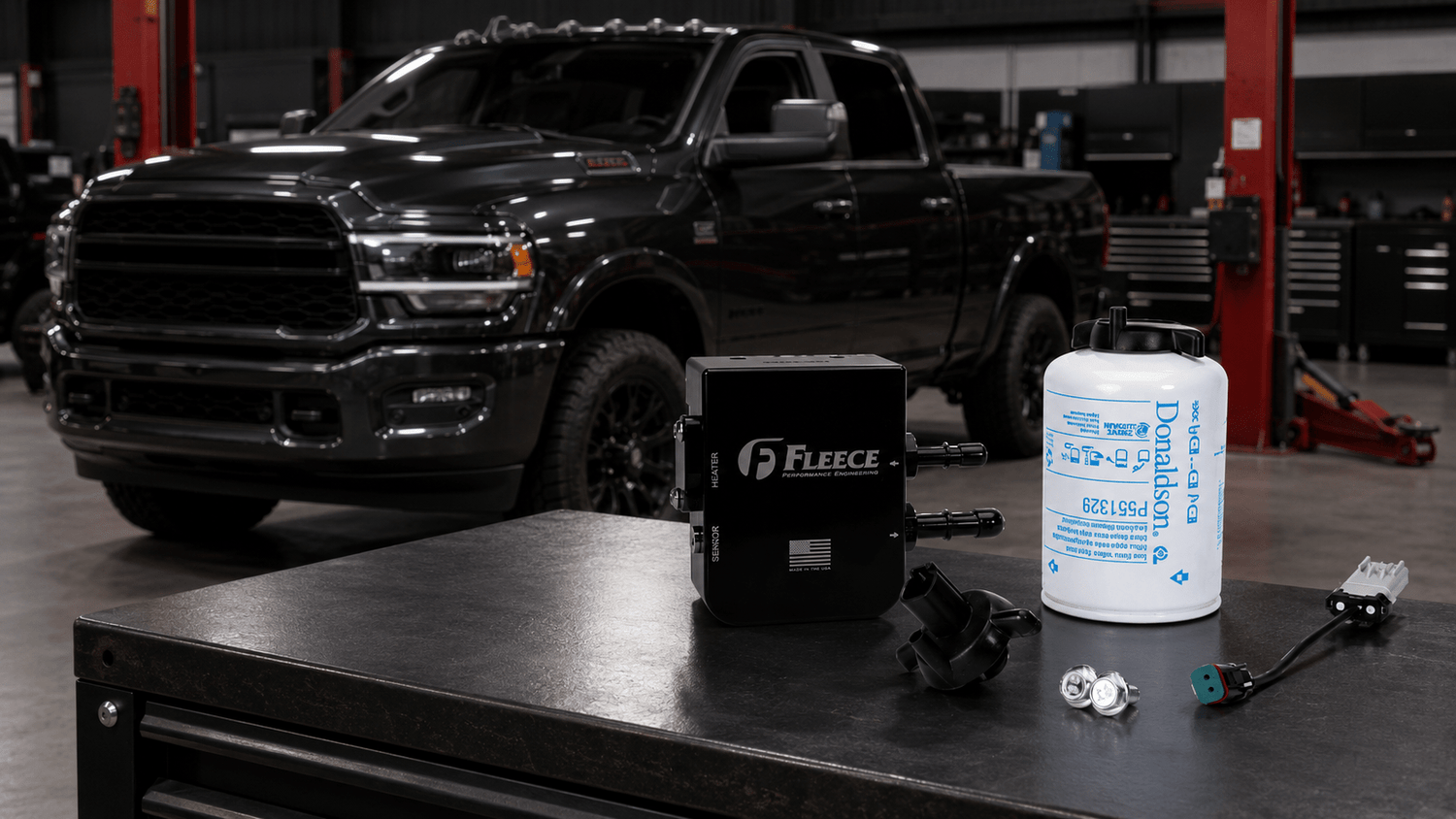
Billet filter-base conversions can replace failure-prone components while allowing the use of convenient spin-on filters. For example, Southern Diesel Supply offers a Fleece under-bed fuel-filter assembly for 2019–2024 Cummins trucks and a Fleece engine-mounted fuel-filter assembly for 2011–2026 6.7L Powerstroke trucks.
These upgrades replace factory plastic components with durable billet-aluminum assemblies and easily serviceable Donaldson spin-on filters.
Understanding Micron Ratings
A micron rating tells you the approximate size of particles a filter is intended to capture. A lower number represents a smaller particle—but the lowest advertised micron number does not automatically make a filter the best choice.
When comparing filters, consider:
- Whether the rating is nominal or absolute
- Filtration efficiency at the stated micron size
- Water-separation efficiency
- Dirt- and water-holding capacity
- Fuel-flow capability
- Restriction as the filter loads
- Cold-weather performance
- Replacement-filter availability
A filter must provide adequate protection without excessively restricting fuel flow. This is why we recommend using a complete, application-specific system instead of combining random filter bases, fittings, and filters based only on advertised micron ratings.
The Different Levels of Fuel-System Protection
Not every truck needs the same upgrade. Fuel filtration can generally be improved in four ways.
1. Properly Maintain the Factory System
The starting point is installing high-quality replacement filters at the correct interval. Trucks operating in severe conditions may need filters changed sooner than the maximum factory interval.
This is the minimum level of protection every diesel truck should receive.
2. Upgrade the Factory Filter Housing
A replacement filter base can improve serviceability and replace aging or failure-prone factory components. Depending on the application, these systems may use commonly available Donaldson or CAT-style spin-on filters.
This is often a strong choice for stock or lightly modified trucks when the owner wants a durable, straightforward upgrade.
3. Add Secondary or Drop-In Filtration
A secondary or drop-in filtration system adds another stage of protection while retaining much of the factory fuel-delivery system.
For example, certain FASS Drop-In fuel systems use the truck’s factory in-tank pump while adding upgraded filtration. This can be an excellent option for owners focused primarily on fuel cleanliness who do not require a complete high-flow lift-pump system.
4. Install a Complete Lift-Pump and Fuel Air-Separation System
A complete FASS or AirDog system combines fuel delivery, water separation, particulate filtration, and air/vapor separation.
These systems are commonly used on:
- Tuned or higher-horsepower trucks
- Trucks used for heavy towing
- Vehicles with increased fuel demand
- High-mileage trucks
- Builds with upgraded injection pumps or injectors
- Trucks that need a more consistent low-pressure fuel supply
Southern Diesel Supply carries complete systems, including the FASS Titanium Signature Series and AirDog II-5G fuel air-separation systems.
The correct flow rating depends on the engine, fuel-system configuration, horsepower level, and intended use. Bigger is not automatically better, and not every stock truck needs a high-output competition-style pump.
What Upgraded Filtration Cannot Do
An upgraded filtration system reduces risk, but it cannot make a diesel fuel system indestructible.
No fuel filter can guarantee protection against:
- A mechanical injection-pump failure
- Large quantities of gasoline or DEF
- Incorrect installation
- Neglected filter changes
- Contamination introduced downstream of the filter
- Existing damage already inside the fuel system
If gasoline, DEF, or another incorrect fluid may have entered the fuel tank, stop operating the truck immediately. Do not repeatedly cycle the key or attempt to drive the contamination through the engine.
The sooner the system is inspected and cleaned, the better the chance of preventing widespread damage.
Fuel-Filter Maintenance Still Matters
Even the best filtration system cannot protect your truck if it is neglected.
To get the greatest protection:
- Follow the filter manufacturer’s service requirements
- Shorten service intervals when fuel quality is questionable
- Drain water separators as directed
- Never ignore a Water-in-Fuel warning
- Keep the filter area clean during service
- Inspect fuel lines, fittings, wiring, and mounting hardware
- Carry a replacement filter during long-distance towing or travel
- Purchase fuel from busy, reputable stations
- Use fuel additives as a supplement—not a replacement for filtration
A noticeable loss of power under load, hard starting, unstable fuel pressure, or a suddenly noisy lift pump can indicate a restricted filter, but those symptoms can also have other causes. Proper testing should be performed before replacing parts.
Is Upgraded Fuel Filtration Worth It?
If you plan to keep your truck, tow regularly, run increased power, or depend on it for work, upgraded fuel filtration is one of the most practical reliability investments you can make.
The cost of quality filtration is small compared with the price of replacing an injection pump, injectors, rails, lines, and other contaminated fuel-system components.
The goal is not simply to install the finest filter available. The goal is to create a complete system that delivers clean, dry, air-free fuel at the correct pressure and volume for your truck.
Let Southern Diesel Supply Help You Choose the Right System
Fuel systems vary significantly between Cummins, Duramax, and Powerstroke applications. Model year, engine platform, bed length, cab-and-chassis configuration, horsepower, and intended use can all affect which system fits your truck.
Southern Diesel Supply & Repair can help you choose the proper filter conversion, drop-in filtration system, or complete FASS or AirDog system for your application.
Shop diesel fuel-system upgrades online, call or text (352) 722-5295, or have your system professionally installed at our nine-bay diesel facility in Wildwood, Florida.
Protect the fuel system before contaminated fuel gives you a reason to wish you had.

Leave a comment
This site is protected by hCaptcha and the hCaptcha Privacy Policy and Terms of Service apply.